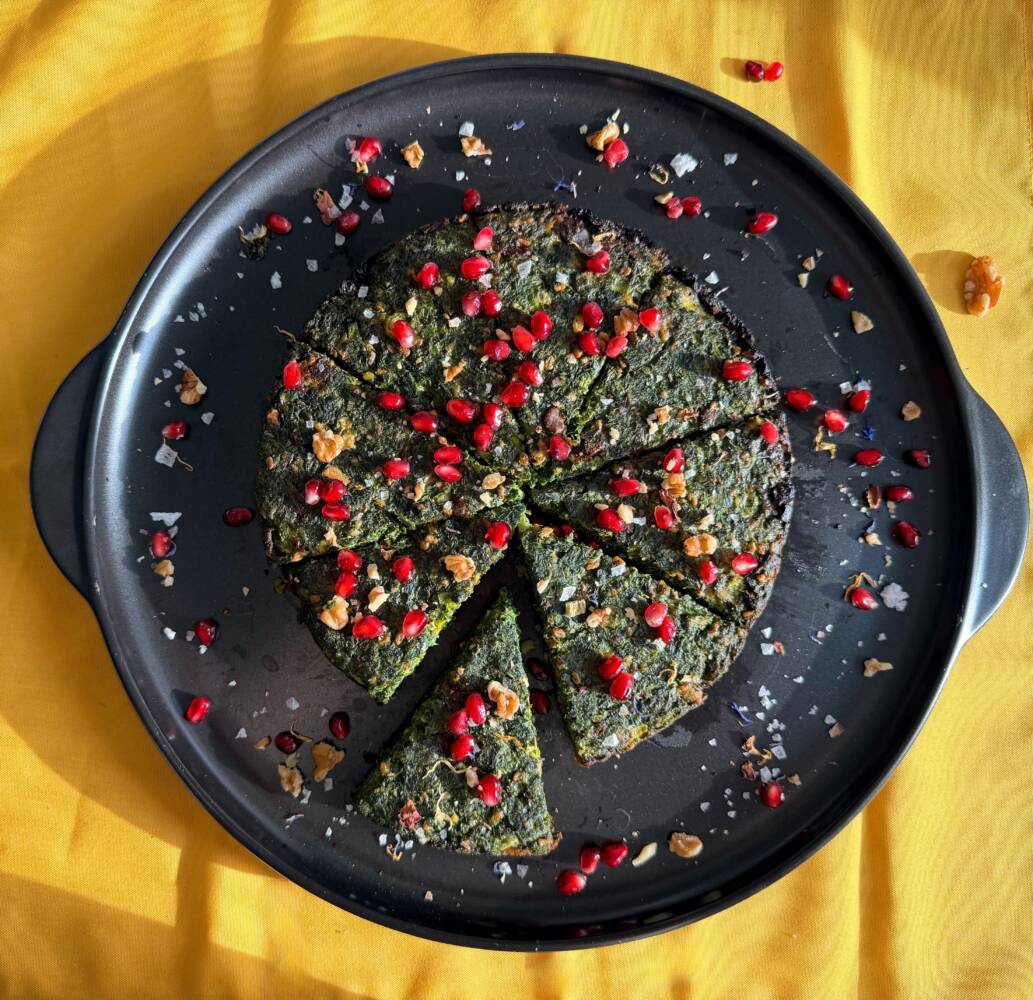

In the spirit of Persian Nowruz, I found myself inspired by the band,Shedonist,to create a Kookoo Sabzi—a dish that is fresh, vibrant, and rooted in tradition. But first, let’s get into the story behind Shedonist.
I recently caught up with Jasmin Toubi, the lead singer of Shedonist, a Nashville-based band influenced by grunge, blues rock, and alternative music. They create a sound that feels both gritty and smooth. The band’s name is inspired by the hedonist idea, reinterpreted through a feminine lens. At its core, hedonism is a philosophy centered on seeking pleasure and avoiding pain. But for Jasmin, it’s less about indulgence and more about a deeper meaning: the freedom to live, create, and express oneself fully. This philosophy drives the band’s spirit.
Shedonist is a band that refuses to stick to a single musical style; their sound is always changing. When I listened to “Black Hole” and “Ain’t Going Down,” I immediately noticed this variety. “Black Hole” has a gritty, 90s grunge vibe similar to Soundgarden—it’s heavy and immersive. In contrast, “Ain’t Going Down” slows down the tempo, adopting a bluesy, almost smoky tone. Each song has its own unique character, which is precisely their goal. Their music draws from a wide range of rock influences, including grunge, punk, blues, and even heavier, sludgier sounds. This mix creates something that feels both nostalgic and original. With Ray Walsh’s textured, expressive guitar work alongside Keever White’s steady, driving drumbeats, the band creates a strong foundation of riffs and rhythms that support Jasmin’s fierce, unmistakable presence at the forefront. This eclectic approach truly reflects who they are as a band.
For Persian American members Jasmin Toubi and bassist Rose Badiei-Savage, rock music has never been just a genre—it’s an attitude, a release, and a form of rebellion. It’s a space where identity, culture, and expression collide freely. Jasmin grew up immersed in Persian music, a constant thread shaped by her parents’ roots in Iran. Her father left Iran at 18, her mother at just five, and between those experiences, she was raised in a space that carried both deep cultural memory and American influence. Persian music was foundational—but as she got older, she found herself drawn toward rock music. There was something rebellious in it, something freeing. And she didn’t want to choose just one path—she loved all of it: blues rock, grunge, punk, metal. That blend became her unique sound and, in many ways, her identity. For Jasmin, music isn’t optional—it’s instinctive. It’s always been a part of her. But like many creatives—especially those from immigrant families—pursuing it wasn’t always encouraged. There was a more traditional path waiting for her: law school. She followed it for a while, working at a law firm after graduation, trying to find her way. But it didn’t stick. Because creating never leaves you. So, she chose music—completely. Even now, years later, with the possibility of law school resurfacing, it feels less like a contradiction and more like a full-circle moment—one that doesn’t diminish who she is as an artist but enhances it. For Jasmin Toubi, rock music—like her Persian American identity—is a powerful mix of attitude, release, and rebellion, central to her role in Shedonist alongside bassist Rose Badiei-Savage.
Jasmin’s formative years were deeply influenced by Persian music, a constant presence from her parents, whose roots in Iran shaped her upbringing. Her father left Iran at 18, her mother at five. This heritage, combined with American influences, formed her foundation, yet as she grew older, rock music became a powerful, freeing pull. She refused to limit herself, exploring everything from blues rock and grunge to punk and metal. This broad musical taste now defines her unique sound and identity. Music was always an instinctive passion for Jasmin, supported by her family. However, like many children of immigrants, she initially faced pressure to pursue a more traditional career: law. She worked at a law firm, trying to follow that path, but her creative urge proved too strong to ignore. She chose to fully dedicate herself to music. Now, years later, the idea of returning to law school isn’t seen as a contradiction, but as a meaningful, full-circle experience that enriches, rather than diminishes, her identity as an artist.
Shedonist’s debut album, *Young, Dumb, and Stupid*, captures a key moment of change. Created by Jasmin at 22 during the pandemic, the music shows the struggle between societal expectations and personal passion, structure and freedom, and the overall uncertainty of a world in flux. Her simple response to this uncertainty was to dedicate herself to making music, no matter what the future might bring. A strong vein of heritage, history, and the fight for freedom runs through her work. A major influence is the Iranian singer Googoosh, not just for her artistry but for her powerful life story. Silenced by the Iranian regime for over twenty years, Googoosh’s triumphant comeback to the global stage made a deep impression on Jasmin.
Growing up, Jasmin was deeply aware of the sacrifices her parents made and the freedoms she, by contrast, has: the ability to sing, perform, and live freely as an artist. This freedom is something she and Rose do not take for granted. When performing, Shedonist’s music goes beyond simple entertainment; it becomes a form of voice. They often stand up for those in Iran and elsewhere who cannot speak openly, facing imprisonment or worse for expressing themselves. This crucial reality, which they believe is not always fully understood in the U.S., is a message they bring to every venue they play. For Jasmin, it ultimately boils down to something simple and universal: everyone deserves the freedom to be who they are. To speak, create, and exist without fear. And that idea extends far beyond Iran. She thinks about Afghanistan. About girls losing access to education. About systems that silence identity and expression. The philosophy behind Shedonist may start with hedonism, but it evolves into something much larger—an insistence on human freedom, dignity, and the right to live fully. That same spirit guides what’s next.
The band is currently working on a new four-song EP, which is expected to release two singles, with the first, “Mrs Jones,” set for release on April 3rd, and a full album likely coming in summer 2026. They are also preparing for their first tour, which feels like a big step forward. Long-term, they aim to perform on larger stages, open for more prominent artists, and expand their reach with their sound and message. If their upcoming work is similar to what they’ve already produced, it will not only be heard but also deeply felt.
Follow Shedonist on Instagram

When it comes to food, Jasmin’s palate is deeply rooted in culture, comfort, and memory. One thing she doesn’t enjoy? Asparagus—so it’s safe to say there will be no asparagus tart here.
For Jasmin, Persian food is deeply meaningful. It brings back memories, signifies family, and expresses her cultural identity. She laughed about how Persian grandmothers tend to feed you endlessly, regardless of whether you’re hungry. This love for food has been a constant in her life. Her boyfriend, Ray, who also plays guitar in their band, has gradually come to appreciate that world as well. Living together, he’s been learning about Persian cuisine and traditions firsthand, including taarof—the courteous exchange of offering and insisting. Some of Jasmin’s most nostalgic dishes are simple. One she calls “soupy” consists of a comforting chicken-and-chickpea dish, served over rice with a cumin-infused broth. She also loves Zereshk Polo for its perfect balance of sweet and savory—a dish with bright barberries layered into fragrant rice. Although her family didn’t often make it growing up, it’s now one of her favorite cravings. Another dish is Kookoo Sabzi, associated with Nowruz but also carrying emotional significance, as it’s sometimes served during mourning. For Jasmin, it symbolizes both occasions, especially reminding her of her grandmother. Filled with fresh herbs, it’s vibrant, earthy, and connected to spring and renewal.
Her daily meals are simple, nourishing, and centered around whole ingredients. Basmati rice is a staple—usually served with perfectly crisp potato tahdig, which, according to Jasmin (and honestly, I agree), is the top-tier tahdig. Onion tahdig is a close second, especially when layered with flavors like cumin and coriander. Bread tahdig? Bottom tier. And that’s a hill we’re standing on.
Her weeknight meals often come together effortlessly—ground beef seasoned with spices and vegetables, baked chicken paired with sweet potatoes, all generously coated in garlic and olive oil. This kind of cooking proves that simplicity can lead to incredible flavors—fresh, tasty, and nourishing in every bite. Ray, however, would happily eat pasta daily if left to his preference. Living with Jasmin, however, has broadened his culinary horizons—he’s now trying foods he previously avoided, like dates and mushrooms, sometimes without even realizing it at first. A touch of Persian influence makes a noticeable difference. For snacks, she prefers simple, fresh options: cheese plates with apples, berries, and Persian cucumbers sprinkled with salt and lemon; smoothies; and smoothie bowls. Everything is well-balanced—comforting yet made from whole, nutrient-rich ingredients.
When it comes to sweets, Jasmin leans into both tradition and experimentation. She loves ice cream—especially Persian ice cream, with its signature notes of saffron, rose water, and pistachios. It’s fragrant, nostalgic, and unmistakably tied to her culture. But she also keeps it classic with flavors like chocolate and coffee. Baking is something she enjoys too, even if she doesn’t always crave what she makes. Recently, she experimented with matcha chocolate chip cookies, and just last week, she made her first cheesecake—putting her own healthier spin on it. Using cottage cheese and Greek yogurt blended with eggs, vanilla, and sugar, she created a lighter filling, then used crushed sweet pretzels for the crust—an unexpectedly perfect touch. Finished with a homemade berry compote, it came together as something both indulgent and balanced.
One of her most meaningful food memories is a dish her dad used to prepare during her periods: eggs with dates. He would caramelize dates in butter until they’re soft and flavorful, then crack eggs over them, leaving the yolks slightly runny. This dish is both comforting and nourishing—full of nutrients, warmth, and love. Later, she discovered that dates are especially beneficial during her cycle, making it a tradition rooted in wellness and instinct. This balance—between nourishment, culture, and creativity—truly reflects her passion for food. While her mom tends to be more analytical, her dad embodies the creative spirit in the kitchen. As a painter and musician, he views cooking as an art form, one he is drawn to for its color, flavor, and expression. His influence is evident in Jasmin’s cooking and creative process.
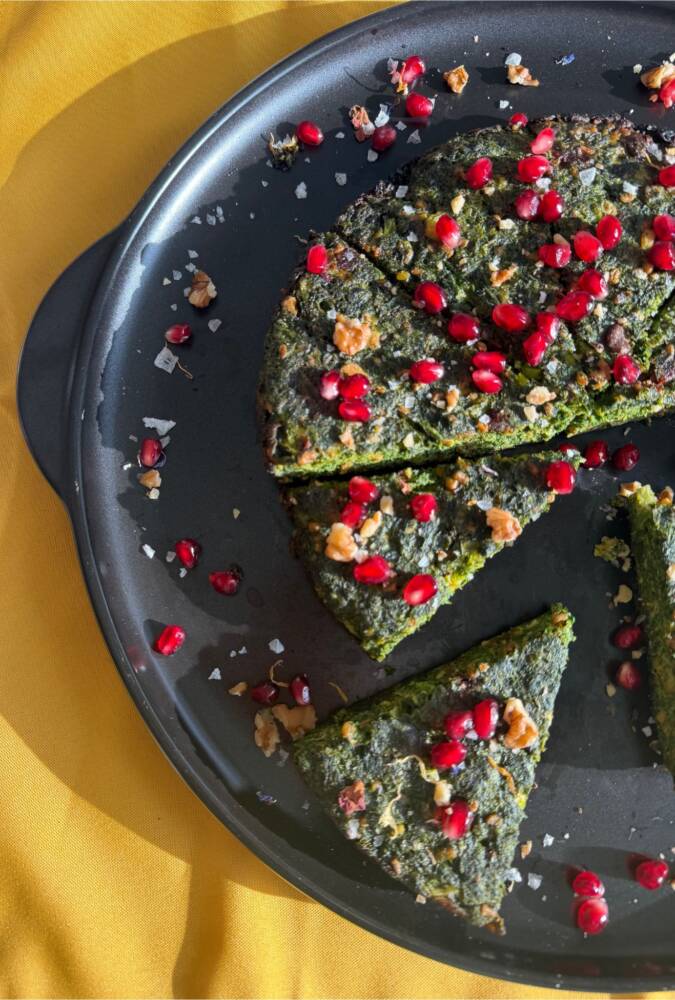
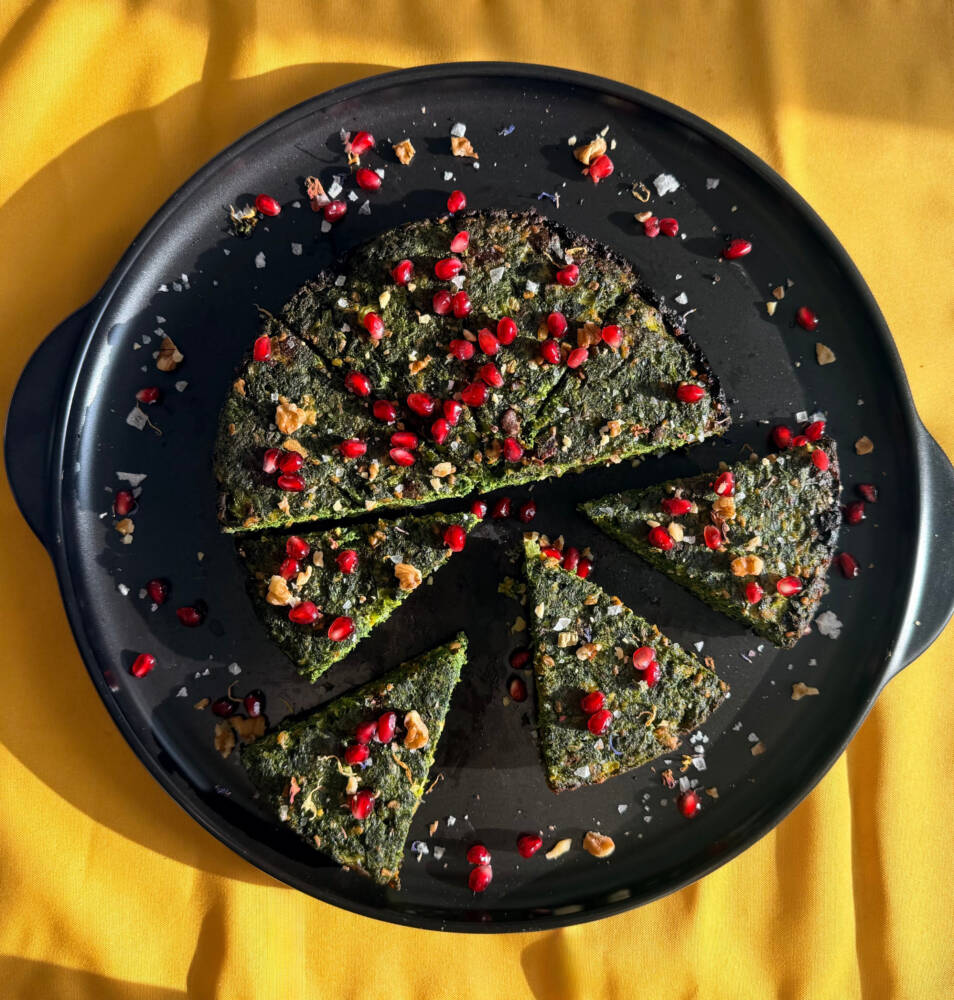
In celebration of the timing and Persian Nowruz, I was inspired to create a Kookoo Sabzi. Filled with fresh herbs, it embodies spring with every bite. I added walnuts for texture and depth, and, since barberries weren’t available, I used chopped dried sour cherries for a bright, tangy flavor. To finish, I topped it with floral-infused flaky sea salt, sprinkled with edible petals, and garnished with fresh pomegranate arils for color and sweetness. It felt like a perfect blend of tradition and new interpretation. A small tribute to Jasmin and Rose—two Persian women leading bravely with strength and presence. But it also stands for something more. Celebrating Nowruz this year feels complex. Amid everything happening in Iran, it can be hard to hold both joy and grief. Yet, even in that tension, it’s vital to continue celebrating culture—honoring heritage, sharing stories, and creating space for remembrance and hope. This Kookoo Sabzi became that symbol for me—of renewal, new beginnings, and freedom. It also reflects Jasmin’s passionate call for the right to live, create, and be fully present. On a golden-yellow tablecloth inspired by the colors of the Nowruz haft-seen, it quietly celebrates spring, resilience, and fresh starts. Check the recipe below. Nowruz Mubarak—wishing all Persians and everyone celebrating worldwide a new year filled with peace, freedom, prosperity, love, and the courage to honor culture, voice, and new beginnings.
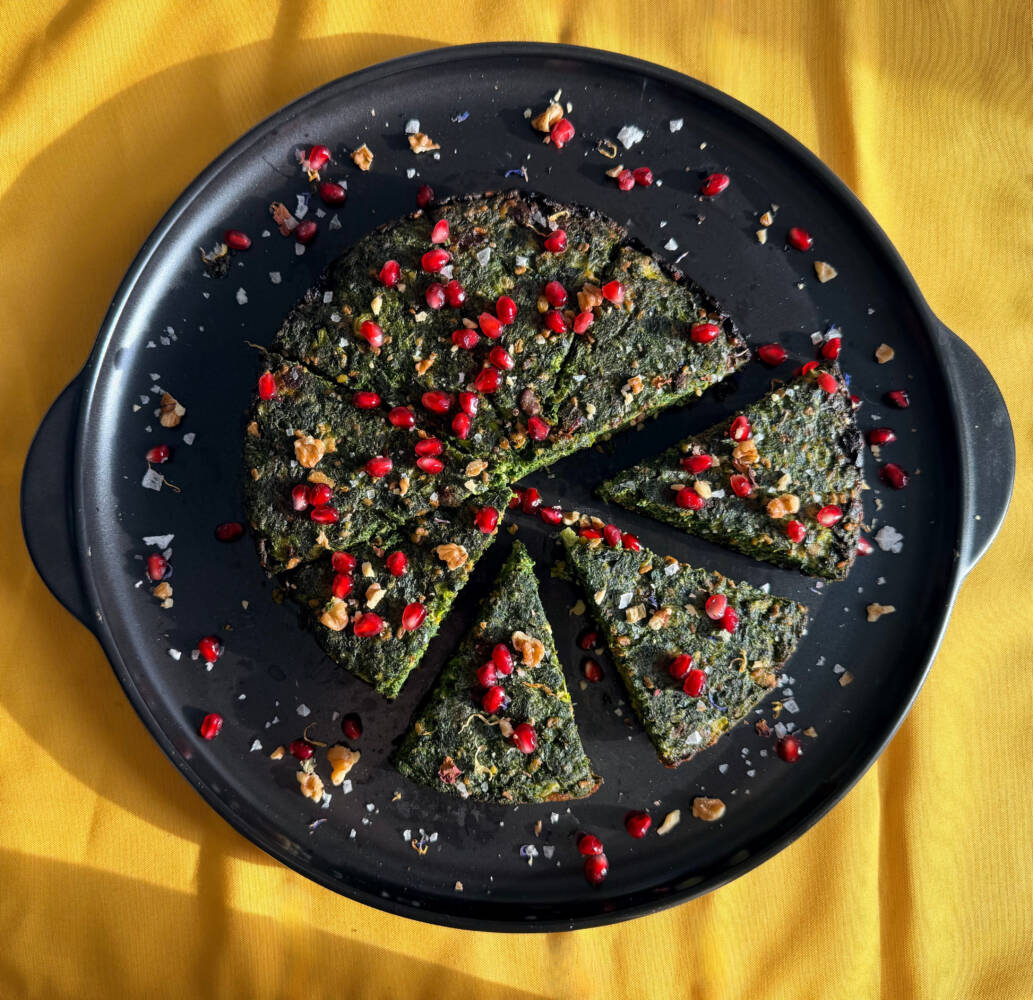
Kookoo Sabzi
Ingredients
- 2 cups parsley, finely chopped
- 1½ cups cilantro, finely chopped
- 1 cup dill, finely chopped
- ½ cup green onions or chives, finely chopped
- 2 tablespoons dried fenugreek, crushed in your hands
- 4 large eggs
- 1 tablespoon flour
- ½ teaspoon turmeric
- 1 teaspoon sea salt
- ½ teaspoon ground black pepper
- ¼ cup walnuts, chopped
- 3 tablespoons dried sour cherries, roughly chopped
- 4 tablespoons extra virgin olive oil

Directions
- Finely chop all the herbs very small. The mixture should be mostly herbs with just enough egg to hold it all together.
- Gently crush the dried fenugreek between your fingers before adding it to bring out its aroma.
- Add eggs, flour, turmeric, salt, pepper, walnuts, and sour cherries, then gently mix until the herbs are evenly coated.
- Warm the oil in a 10-inch skillet over medium heat.
- Evenly spread the mixture and gently press it into the skillet.
- Cover and cook for 12 to 15 minutes on medium-low heat, until the bottom forms a golden crust.
- Place a plate over the pan, flip the kookoo onto it, then slide it back into the pan to cook for another 8–10 minutes.
- Let it rest for 10 minutes, then cut into wedges or squares.
- Serve with lavash or sangak bread, mast-o-khiar (yogurt, cucumber, mint), sabzi khordan (fresh herbs and radishes), and pickles or torshi. Enjoy!




Leave A Comment