

There’s a strong sense of community in chaos when it’s executed thoughtfully. Not reckless or haphazard, but deliberate, rhythmic, and communal. Volk Soup, a noise punk band from Leeds, instinctively understands this concept. I recently caught up with Harry Jones from Volk Soup to talk about all things food and music. Their debut album, 10p Jazz, not only showcases their developing sound but also evokes the feeling of people moving collectively through chaos, trusting that the rhythm will lead them somewhere significant. It’s like being around a table where everyone shares from the same platter—hands reaching in, sauces blending, and the atmosphere becoming more relaxed. This connection makes Ethiopian cuisine, with its shared dishes and tear-and-dip tradition, a fitting culinary pairing to Volk Soup’s music. Check out the Doro Wat recipe later in this feature!
Volk Soup started in early 2020, just before the COVID-19 pandemic caused a global pause. It began as a project between vocalist/guitarist Harry Jones and bassist Ryan Walker, but they had to pause before they could perform live. When concerts resumed, the band returned—louder, sharper, and eager to grow. By 2022, Volk Soup had expanded into a six-piece group, adding saxophone, trumpet, and another guitar. This growth didn’t make their sound smoother; it made it more experimental. Brass instruments became additional percussive tools. Their songs twisted, jerked, and reformed in real time. While their early post-punk roots remained clear, they now incorporated elements of free jazz and a highly physical energy.
10p Jazz stands as the band’s most complete release yet—not because it’s polished but because it embraces tension. The album effectively combines immediacy with depth, reflecting Volk Soup’s raw live energy while also introducing elements of discomfort, abrasiveness, and unpredictability. A dynamic tension is present: grooves that initially seem fixed suddenly disintegrate; rhythms that break down then reemerge elsewhere. It’s chaotic yet deliberate. The record invites close listening but also encourages movement—music that engages both the mind and the body. A key theme is its rejection of false seriousness, especially the kind promoted by modern work culture. Volk Soup’s compositions oppose the idea that productivity should overshadow human connection or that time must always be sacrificed to duty. Instead of preaching, the band expresses this resistance through energetic, lively vocals, unruly choruses, and almost feral moments, reminding us that occupying space, making noise, and behaving imperfectly are acts of resilience.

Looking ahead, Volk Soup’s vision is refreshingly grounded. The goal isn’t excess or spectacle—it’s continuity. To keep recording. To keep touring. To move through the UK and Europe, and eventually beyond, without losing the collaborative core that defines the band.
That sense of sustainability—creative, emotional, communal—runs through everything they do. Be sure to stream 10p Jazz, available on all platforms and we can’t wait to hear more from Volk Soup!
Volk Soup Linktree

When it comes to food, a pattern emerged quickly: Volk Soup eats best when everyone eats together. Most of the band is vegan, and meals on tour tend to be practical—snackable, shared, easy to gather around. But the most memorable food experiences weren’t about convenience; they were about collective participation. Ethiopian meals stood out immediately—injera spread wide, stews layered on top, no single plate belonging to anyone.
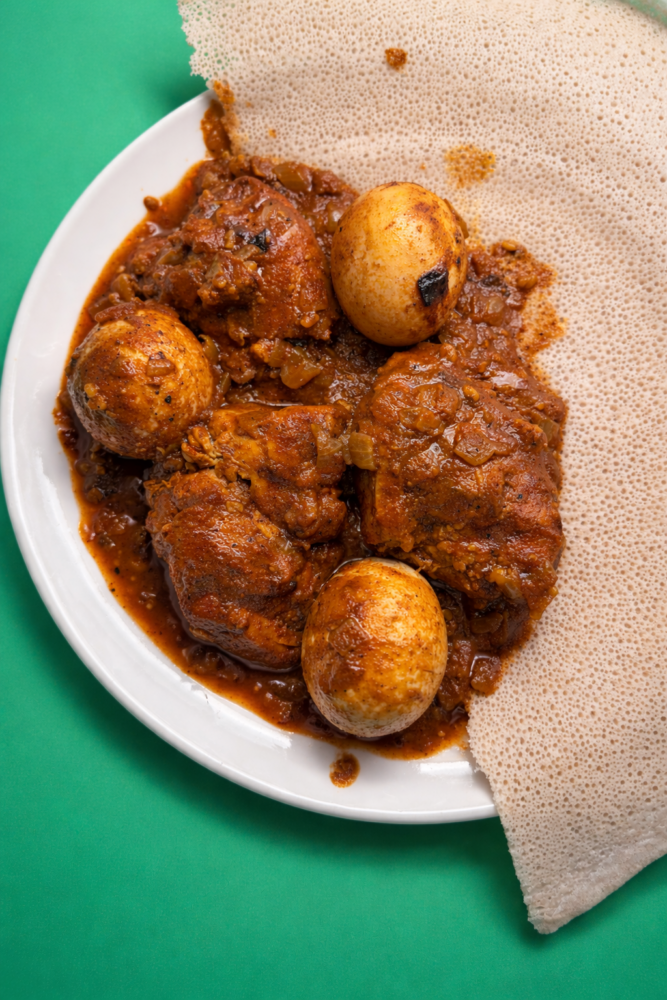
That eating style mirrors Volk Soup’s group dynamic—no hierarchy, no separation, everyone sharing from the same bowl, trusting the center. This Lhyme feature was inspired by Ethiopia’s Doro Wat, a slow stew with onions, berbere, and layered heat, served with injera. Like 10p Jazz, it’s not about perfection but immersion—letting flavors blend, sauces stain the bread, and the meal unfold naturally.
During my conversation with Harry, he shared that he loves desserts, especially British sweets with sponge, almonds, and a warm, comforting feel. His appreciation for contrast—hot and cold, soft and structured—matches Volk Soup’s music, which balances control and chaos. Texture is key: crunchy, spongy, sticky, sharp. Both in sound and food, the band seeks multi-sensory experiences.
This Lhyme pairing invites you to do the same: Put on 10p Jazz. Lay injera across the table. Serve something meant to be shared. Let the structure loosen. Let the chaos connect you. Because sometimes the most meaningful experiences—musical or culinary—are the ones that ask everyone to gather in close and take part together. Check out the recipe below for both the traditional and vegan versions of this delicious and comforting meal!

Traditional Doro Wat (Ethiopian Chicken Stew with Thighs & Eggs)
*Serves 4 to 6
Ingredients
- 2½–3 pounds bone-in, skinless chicken thighs
- Juice of 1 lemon
- 1 teaspoon sea salt
- 6 large eggs, hard-boiled and peeled
- Berbere Spice Mix (Homemade) (Makes ~½ cup; you’ll use 3–4 tablespoons)
- 2 tablespoons paprika
- 1 tablespoon ground chili powder (adjust for heat)
- 1 tablespoon ground cumin
- 1 tablespoon ground coriander
- 1 teaspoon ground ginger
- 1 teaspoon ground cardamom
- 1 teaspoon ground fenugreek
- ½ teaspoon ground nutmeg
- ½ teaspoon ground cloves
- ½ teaspoon ground cinnamon
- ½ teaspoon ground allspice
- 1 teaspoon black pepper
- 1 teaspoon salt
- 5 yellow onions, very finely minced
- ¼ cup unsalted butter + 2 tablespoons avocado oil
- 4 tablespoons homemade berbere spice mix
- 4 cloves garlic, minced
- 1 tablespoon fresh ginger, grated
- 1 tablespoon paprika
- 1½ cups chicken stock (low sodium)
- Sea salt, to taste
Directions
- Toss chicken thighs with lemon juice and salt. Let sit for 15 minutes, then rinse and pat dry. Refrigerate until ready to use.
- Add onions to a heavy pot over medium-low heat with no oil. Cook for 30 minutes, stirring often, until they collapse into a thick, pale paste and most of the moisture has evaporated. Do not brown.
- Stir in the unsalted butter and avocado oil until glossy.
- Add the homemade berbere spice mix and paprika; cook for 3 minutes, stirring constantly, until deeply fragrant and brick-red.
- Add the garlic and ginger; cook for another minute.
- Add the chicken thighs, turning to coat thoroughly. Pour in chicken stock until chicken is mostly submerged. Cover and simmer gently for 35 minutes, turning occasionally, until the chicken is tender and the sauce thick and rich.
- Gently nestle the hard-boiled eggs into the stew during the last 15 minutes of cooking. Turn them carefully so they absorb the sauce. Adjust salt and heat as needed. Let rest 10 minutes before serving.
- Serve traditionally with injera, but also can be served with rice, flatbread, or lentils. Enjoy!

Vegan Doro Wat (Ethiopian Stew with Tofu & Potatoes)
*Serves 4 to 6
Ingredients
- 1 block (14–16 oz) extra-firm tofu, pressed and cut into large chunks
- Berbere Spice Mix (Homemade) (Makes ~½ cup; you’ll use 3–4 tablespoons)
- 2 tablespoons paprika
- 1 tablespoon ground chili powder (adjust for heat)
- 1 tablespoon ground cumin
- 1 tablespoon ground coriander
- 1 teaspoon ground ginger
- 1 teaspoon ground cardamom
- 1 teaspoon ground fenugreek
- ½ teaspoon ground nutmeg
- ½ teaspoon ground cloves
- ½ teaspoon ground cinnamon
- ½ teaspoon ground allspice
- 1 teaspoon black pepper
- 1 teaspoon salt
- 5 yellow onions, very finely minced
- 1/3 cup avocado oil
- 4 tablespoons homemade berbere spice mix
- 4 cloves garlic, minced
- 1 tablespoon fresh ginger, grated
- 1 tablespoon paprika
- 1½ cups vegetable stock
- Sea salt, to taste
- 1 small russet or Yukon potato, cubed
- A squeeze of lemon at the end
Directions
- Toss tofu lightly with salt and a little oil. Roast at 400°F for 20–25 minutes until lightly golden. Set aside.
- Add onions to a heavy pot over medium-low heat, no oil. Cook for 30 minutes, stirring often, until they collapse into a thick, pale paste and the moisture cooks off.
- Add the oil to the onions and stir until glossy.
- Add the homemade berbere spice mix and paprika; cook for 3 minutes, stirring constantly, until fragrant and brick-red.
- Add the garlic and ginger; cook for another minute.
- Add the vegetable stock and stir to combine.
- Add the tofu and potatoes. Cover and simmer gently for 30 minutes, stirring occasionally, until the sauce thickens.
- Adjust sea salt and heat.
- Add a squeeze of fresh lemon juice and rest for 10 minutes before serving to thicken the sauce.
- Serve traditionally with injera, but also can be served with rice, flatbread, or lentils. Enjoy!







Leave A Comment