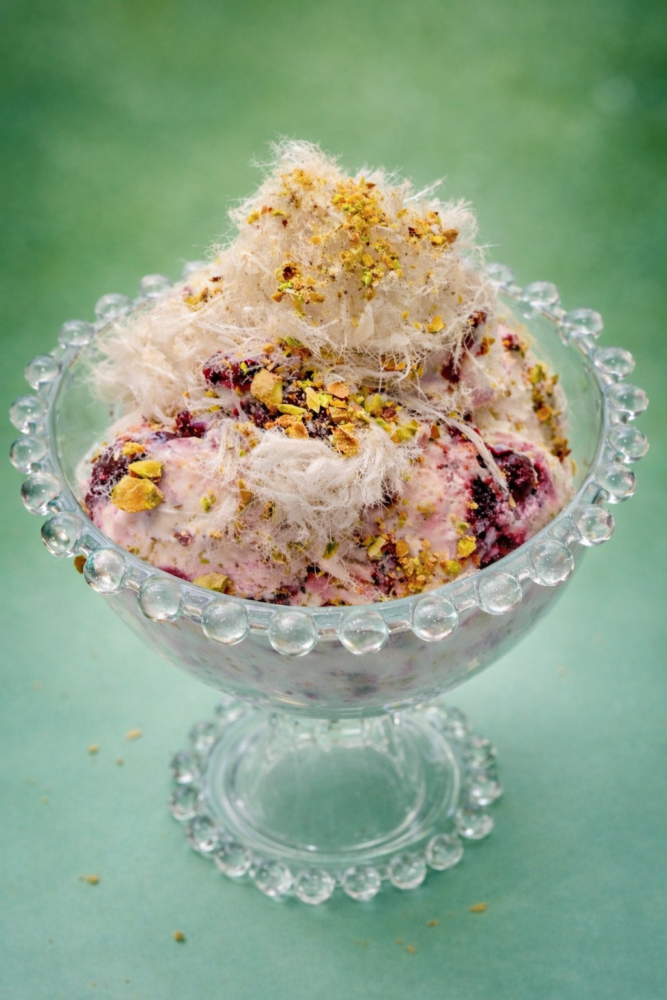

One day, I was scrolling through my Instagram feed, which I genuinely love because the algorithm always delivers incredible emerging artists from around the world, when Maia Moham appeared with her song “Lost Home.” I clicked. I listened. And then I went down the rabbit hole. There was something about the song’s emotional weight that made me pause. I found myself wanting to know more about her story, her voice, and the world she was building through her music. I remember thinking that if she’s open to it, I would absolutely love to interview her. Fast forward a few weeks, and we were sitting down together, talking about all things Maia music, memory, identity, and, of course, food. Here’s the part that felt especially meaningful to me: Maia is Persian. I’m half Persian myself, so there’s always something deeply personal about featuring Persian artists. It gives me the chance to reconnect with my heritage through food, celebrating flavors that feel like home. So, just in time for Valentine’s Day in February, this feature is inspired by something romantic, nostalgic, and distinctly Persian: sour cherry ice cream topped with pashmak (Persian cotton candy) and crushed pistachios. A dessert that speaks to love and heritage. Check out the recipe later in this feature, but first, let’s step into Maia’s world.
Music has always been part of Maia’s life, as if she were born singing. It wasn’t a choice but who she is. Her mom once prayed that Maia would have something unbreakable, and that turned into music. Both believe music is inside her, a lasting, protective gift reflecting a Persian mother’s wish for her child’s unique, enduring happiness. She naturally grew up surrounded by music, joining the choir, playing in bands, and indulging in musical theater. For eight years, she sang a cappella, an experience that left a deep mark on her. Not only did it refine her technical skills—boosting her vocal control, ear, and talent for vocal arrangements—but it also helped her truly master her voice. However, the emotional journey of songwriting unfolded a little more slowly. Growing up as one of just three Persian students in a predominantly white school, Maia had feelings she wasn’t quite ready to explore. Through it all, she’s held onto a powerful belief—that becoming a truly great songwriter involves bravely facing the good, the bad, and the ugly within ourselves and in the world around us.
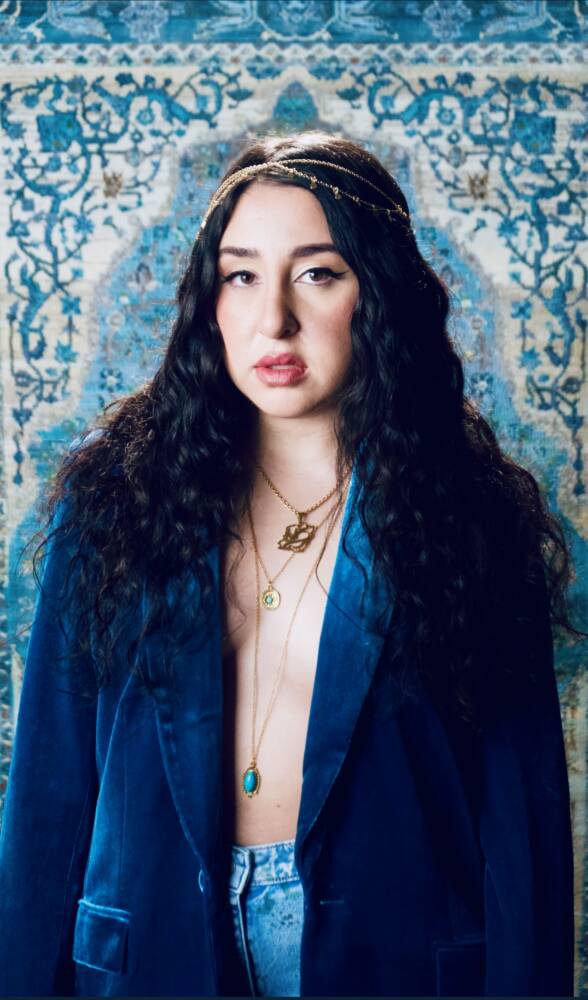
For many years, she wasn’t ready to do that, but everything changed around her junior and senior years of college when she was about 21. During school, music was very much structured, fitting into her schedule seamlessly. But as graduation day drew near, those familiar structures faded away. At the same time, she grew emotionally, meeting more people from diverse backgrounds, including more Persians, which helped her feel more grounded in herself. She started asking herself a new question: What is music going to mean to me now? That’s when she really started writing with real commitment. For about a year and a half, she’d come home every single day after work and write. She didn’t perform or share her songs—she kept them close. With a keyboard by the window in her old apartment, she poured her heart into her music every night—sometimes completing a full song, other times just jotting down a fragment, an idea, or a melody. It was a muscle she worked and nurtured. What began as pure discipline slowly turned into a form of therapy. Music became her way to explore emotions she hadn’t allowed herself to face before. It was how she made sense of her life. Eventually, it became second nature. Now, she feels compelled to write—because it adds color to her life, brings hope to others, and helps her find clarity in a world that often feels confusing.
Over the past five years, she has dedicated herself completely to her craft—songwriting, production, and singing. It’s no longer just a hobby; it’s her passion, her life, and she cannot envision doing anything else. Of course, she faced doubts along the way. Growing up with Middle Eastern immigrant parents often meant meeting certain expectations about what counts as a “real” career. There were years of uncertainty. However, everything changed when Maia secured a major trailer placement in the Fast & Furious franchise, specifically for Fast X. One of her songs appeared in a trailer, and she didn’t initially realize it was fully happening, especially since she had recently signed with a sync agency. When she shared it with her parents, she felt a profound shift, that moment when they recognized her achievement as real. They understood that she was serious and capable of reaching an audience. This was a pivotal moment for both her and her family and a reminder that she is exactly where she’s meant to be.
Maia is naturally drawn to artists who genuinely embrace emotional depth and activism — those who go beyond surface appearances. She has a special love for Hozier, and you can feel that connection in her own work. Growing up, she was influenced by Bastille and enjoyed a steady dose of Adele’s music. On her Persian side, there’s the iconic Googoosh — a voice that has echoed through generations. Her father, who immigrated to America in the 1970s (arriving on Halloween, no less), introduced her to the sounds of The Beatles, Bee Gees, and Cat Stevens. It’s a wonderfully diverse musical palette—Persian classics, British soul, poetic rock, cinematic pop. “Take Me to Church.” In his breakout single, Hozier addressed homophobia and judgment within religious institutions in a way that felt universal. It was specific, pointed, political, and yet, emotionally resonant for anyone who has ever felt shame, repression, or longing. That ability to say something bold and difficult in a way people can feel, rather than just argue, is something Maia deeply aspires to. She also shares her admiration for Sia, especially her early work like “Breathe Me,” which many listeners first encountered through Six Feet Under. Maia is genuinely moved by Sia’s talent for creating something breathtakingly beautiful out of devastating loss. There’s a special quality in her ability to transform tragedy into art that comforts others. Maia hopes to carry this magical alchemy, turning grief into something luminous, into her own work.
Maia’s response to the current events in Iran is complex and emotional. She describes Iran as a culturally and resource-rich country, home to remarkable minds, history, and creativity. However, resources like oil and land have put Iranians in a tough spot, caught between global interests and authoritarianism. She’s frustrated that political talk often obscures the daily struggles of ordinary Iranians, especially the youth, who access the internet but see the world enjoying freedoms they lack. Maia has cousins in Iran—one a talented graphic designer, another a gifted singer—and wonders how their lives might differ if they had her opportunities. Her family’s situation was a matter of chance; her mother was the only unmarried sibling allowed to emigrate when Maia’s grandfather moved to the US. Maia reflects on civil liberties and how brutal it is to see people demand freedom and face violence. She’s frustrated with online polarization and algorithms that promote outrage, noting that most people desire safety, dignity, opportunity, and freedom. Her father is more resigned, believing he might never see a free Iran, but Maia hopes the regime’s actions signal a breaking point. She advocates for amplifying Iranian voices, focusing on real people, and celebrating Iranian culture to remind the world of Iran’s true identity.
Right now, Maia’s single “Lost Home” is out, a song that beautifully captures displacement and longing. She wrote it for her parents, who left Iran after the 1979 Revolution. It’s about the legacy, memories, and pieces of home we carry with us when we start over. While it comes from my Iranian heritage, it’s for anyone who has had to leave the home they once knew and build a new life, holding both what’s lost and what endures. Maia also recently released an acoustic version of “Lost Home.” The arrangement, crafted with her keys player Vincenzo De La Rosa, strips the song down in a way that even she finds deeply moving. She’s continuing to explore her Persian fusion sound, especially after her recent releases, “Never Be the Same”, “Lost Home”, and “Sacrifice”, which marked the first time she intentionally incorporated traditional Persian instruments into a modern pop framework. And she’s going further. Her upcoming song leans darker, synth-driven, slightly more energetic, and almost motivational. It includes something new for her: a short Persian rap verse. It felt right for the song, and everyone she’s played it for is excited about it. It’s bold. It’s evolving. It feels like Maia stepping more fully into the intersection of her heritage and her contemporary pop instincts.
At her core, Maia wants something very simple and very rare in 2026. We live in a hyper-digital, oversimplified, algorithm-driven world. Everything is quick, flattened, and optimized for engagement. When people step into Maia’s shows or press play on her music, she wants them to experience depth. Complexity. Authenticity. She wants it to feel real. She wants people to walk away knowing they have access to emotions they may not even realize are there. To reconnect with that fuller human range — grief, hope, rage, longing, tenderness — without filters. Because that, she believes, is the part of the human experience we cannot afford to lose. I cannot wait to hear more of her Persian fusion pop unfold. Be sure to check out Maia Moham on all streaming platforms.
Maia Moham Music Linktree
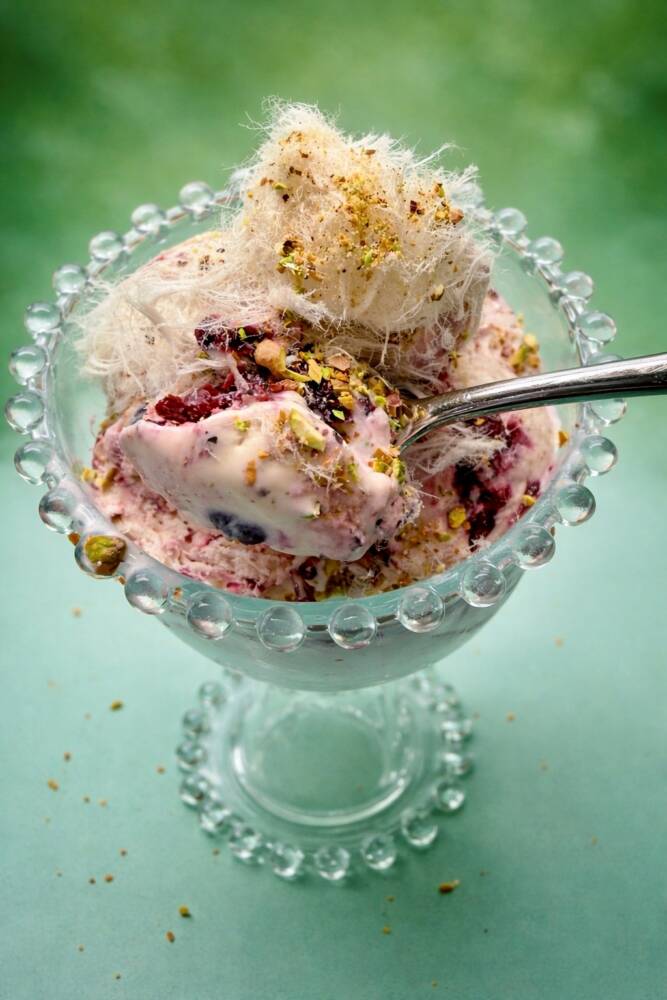
When it comes to food, Maia says she’s slightly sensitive to dairy — but that’s the only restriction. If you ask her what tastes like home, the answer is immediate: Ghormeh Sabzi. Her mom’s version, specifically. Made with lamb. Slow-cooked until it melts into the herbs and kidney beans, deeply savory and intensely aromatic. She laughs that she can’t even order it at restaurants anymore — her mom’s version has ruined it for her. For Maia, the perfect winter day is overcast skies, a warm bowl of ghormeh sabzi, and a little bit of tahdig on the side — that crispy golden Persian rice that shatters when you tap it with your fork. It’s comfort. Its depth. It’s heritage.
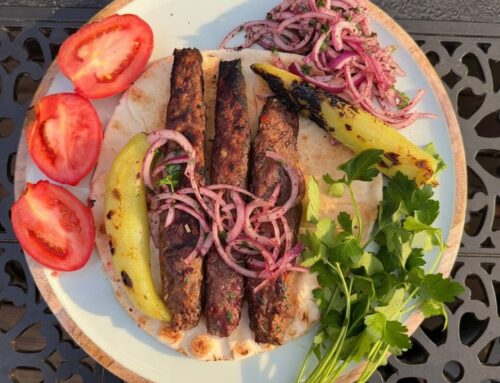
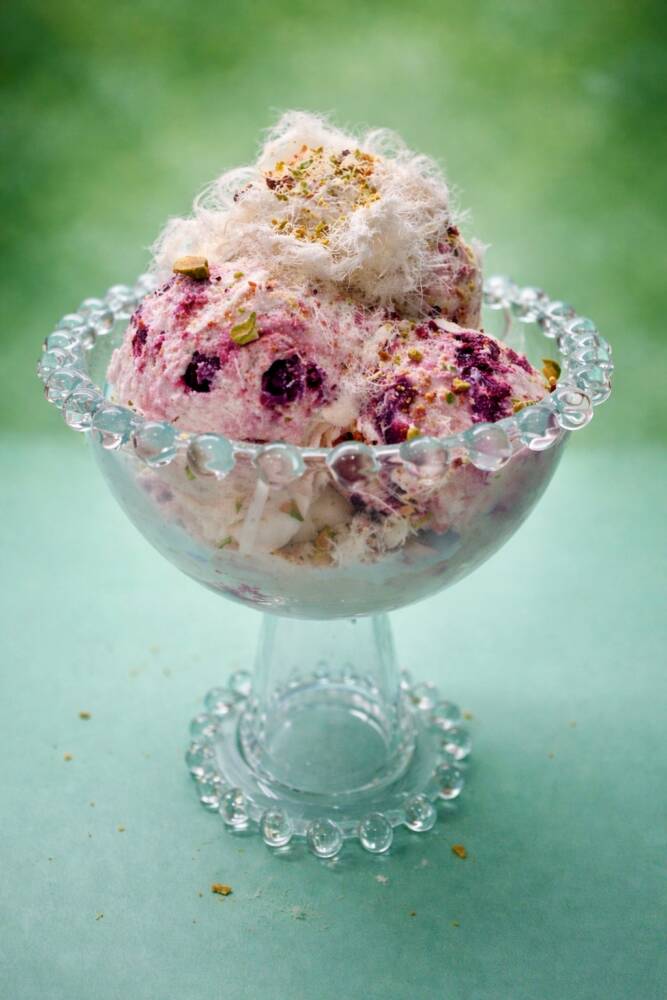
On a daily basis, she leans lighter. Chicken bowls. Salmon bowls. Rice and vegetables. Balanced, simple, and nourishing. She recently became obsessed with a zucchini pasta sauce from LIVWELL — completely vegan, surprisingly rich — tossed with fusilli, shrimp, garlic, and lemon pepper. Her mom also taught her how to make turkey koobideh, a leaner take on the traditional beef kebab. When she’s snacking, she reaches for fresh pomegranate, sour plums, anything tart. That sour-sweet balance shows up everywhere in her palate. And then there’s Persian lavashak, those little bites of fruit leather candy from a local Persian market. Her sweet tooth shifts with the time of the month, but lately, one dessert has been living in her head. Maia recently attended an event at Meymuni Café in Los Angeles, where a vendor served something unforgettable: Sour cherry ice cream, topped with pashmak and finished with crushed pistachios. Pashmak (Persian cotton candy) is airy, wispy, almost thread-like, with a delicate sweetness that melts instantly. Paired with tart sour cherry ice cream, the contrast is perfection. Add pistachios for crunch and depth, and it becomes something elevated but playful. And immediately, I knew, this is the dessert for this feature.
In Persian culture, love is rarely understated. It’s poetic. It’s layered. It’s often expressed through food. From the pomegranate’s symbolism of fertility, abundance, and beauty to the use of saffron, rose, pistachio, and sour cherry in desserts, Persian cuisine leans into contrast. Tartness alongside sweetness. Fragrance alongside richness. Texture against silkiness. It mirrors Persian poetry, from Hafez and Rumi, in which longing and ecstasy coexist in the same breath. Sour cherry (albaloo) in particular carries a romantic nostalgia. It’s vibrant, jewel-toned, and slightly sharp. Just in time for Valentine’s Day, this dessert feels right. It honors Maia’s heritage. It honors love in all its complexity. And it captures exactly what her music does, something tart and honest, softened by sweetness, elevated by depth. Check out the recipe below!
Cherry Ice Cream with Pashmak (Persian cotton candy) and Crushed Pistachios
Ingredients
- 2 cups sour cherries (fresh or frozen, pitted)
- ¾ cup pure cane sugar
- Juice of 1/2 lemon or 1 tablespoon if not fresh lemon juice
- 2 cups heavy whipping cream (cold)
- 1 (14 oz) can sweetened condensed milk
- 1 teaspoon Madagascar Pure Vanilla Extract
- 1/4 teaspoon of sea salt
- Pashmak (Persian cotton candy) for topping
- Crushed pistachios for topping
Directions
- Add cherries, sugar, lemon juice, and sea salt to a saucepan. Simmer for 10 minutes until softened and syrupy.
- Lightly mash the cherries, but do not completely mash, and leave some texture.
- Set the cherry sauce aside and allow it to cool completely. Put it in the refrigerator to cool completely before making the cream.
- In a stand mixer, whip the cold heavy cream until stiff peaks form.
- In a separate mixing bowl, stir together the condensed milk and vanilla.
- Then, gently fold the whipped cream into the condensed milk mixture until smooth and airy.
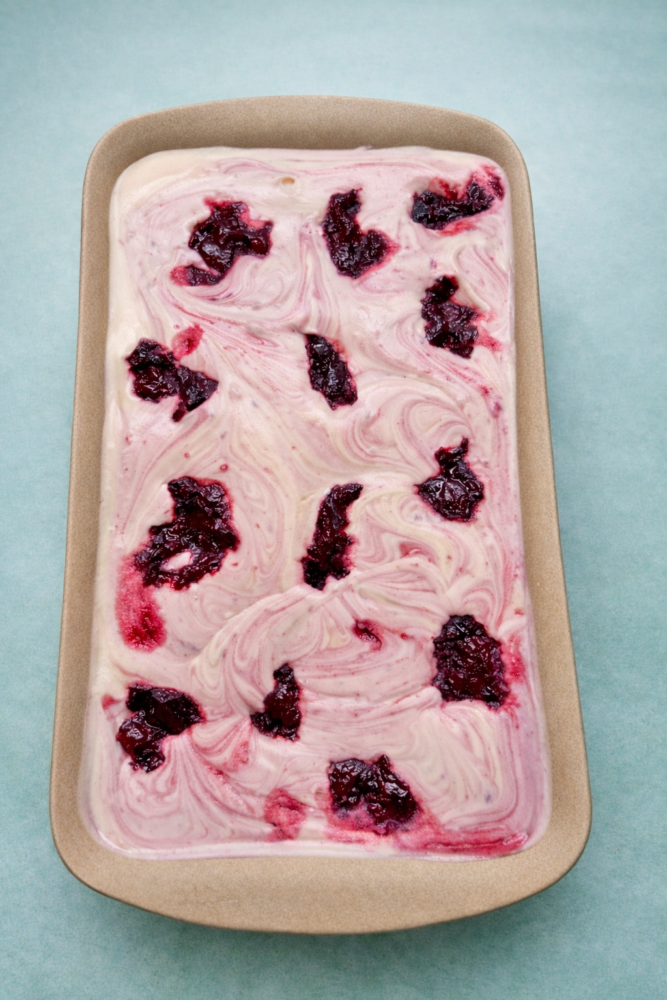
- Spread half the ice cream base into a loaf pan and then spoon over some of the cherry mixture.
- Repeat the layers until the pan is full.
- Gently use a knife to create decorative swirls in the ice cream.
- Cover and freeze for at least 6 hours, preferably overnight.
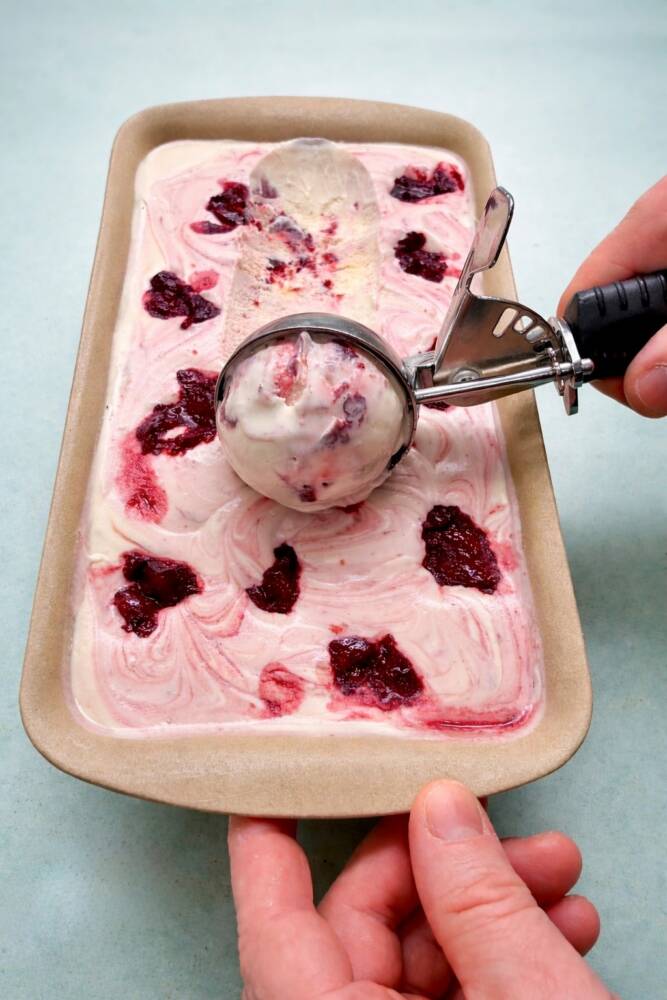
- Let it sit on the counter for 5 to 10 minutes before scooping. Use an ice cream scooper to serve the ice cream, top with pashmak and pistachios. Serve immediately and enjoy!