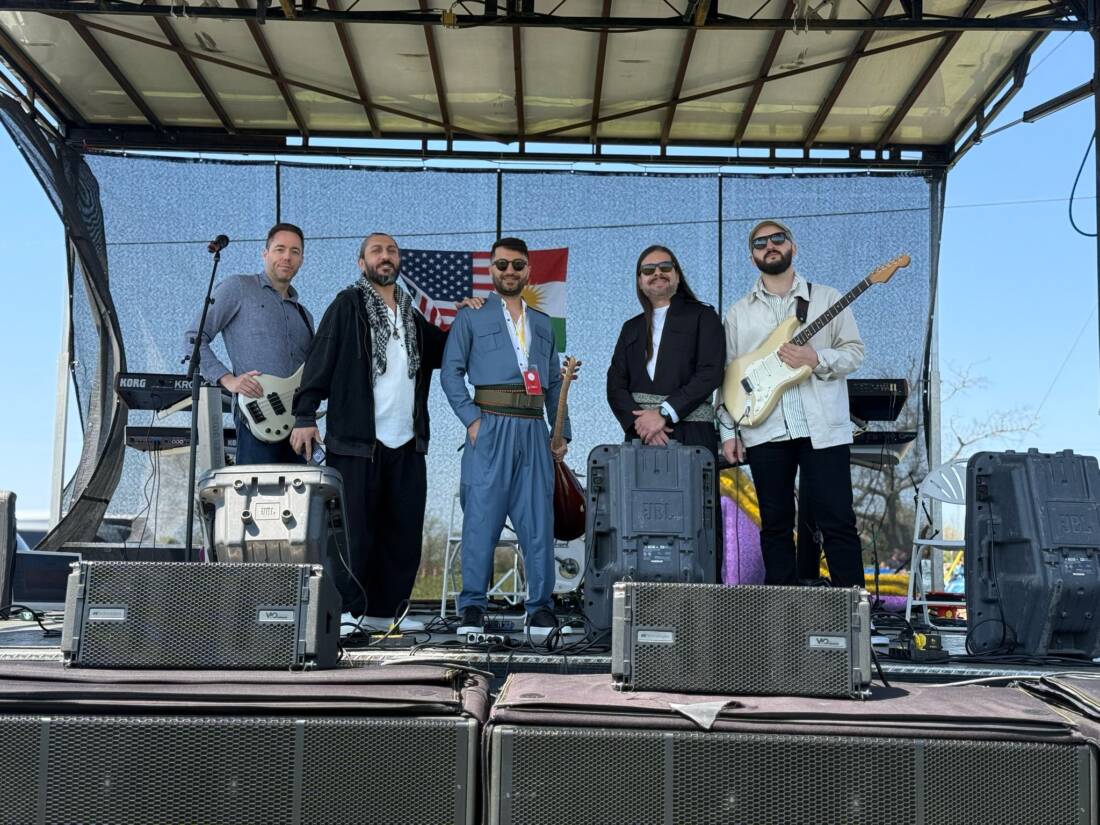
I’ll be honest—this one had me in the kitchen right away. The second I heard “Kurdish band in Nashville,” I knew an Adana Kebab would show up later in this feature. But before we get there, we’ve got to talk about VaVeYLa—because their story is just as layered as the dish. What I love most? None of this was planned.
When I caught up with Kadir Gür, he shared that the band wasn’t formed with a specific plan—it simply grew out of a genuine connection. In late 2024, vocalist Mehmet had just moved from New York to Nashville. With over 20 years of experience in the music industry, he met Kadir—who brought more than 15 years of his own—through a mutual friend from Turkey, who simply said, “You’re both musicians. You should meet.” So, they did. They grabbed coffee, talked about music, and exchanged stories. There was no pressure, no plans to form a band—just a friendly conversation. But something resonated with them. Two weeks later, they played a small, informal house performance—just to feel out the energy. And that’s when everything changed. It wasn’t just their sound that clicked; it was the way they understood each other. Their styles blended effortlessly, feeling natural and instinctive. Slowly, the idea of creating something together started to take shape. While Nashville is home to the largest Kurdish community in the United States, the music most often heard publicly tends to focus on celebration—especially dance. Beautiful and powerful, yet only one part of a much richer story.
VaVeYLa Live Performance
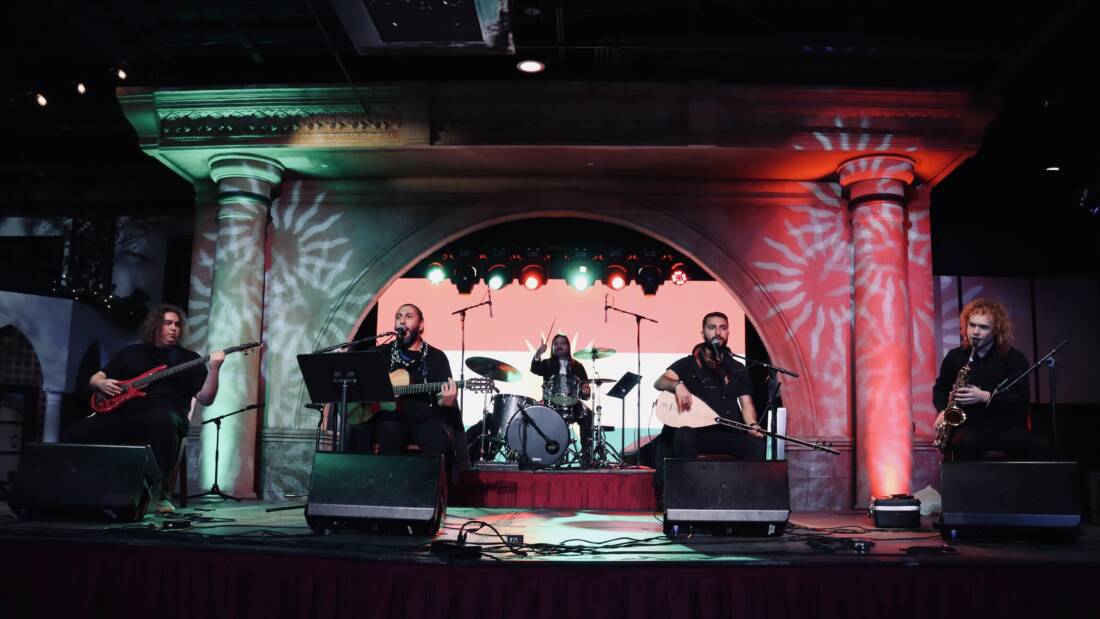
Kurdish music is beautifully layered, filled with joy, sorrow, resistance, love, and longing. It spans regions, dialects, and generations, and VaVeYLa wanted to celebrate it all—not just one sound, but the whole spectrum. Then came a moment that truly changed everything. On December 17, 2024, they were invited to open for Seyda Perinçek in Nashville. They didn’t have a band name yet. They had never rehearsed before, and even their drummer, Carlos from Venezuela, had never played Kurdish music. But they said yes anyway. Kadir shared a few songs in a group chat, and everyone listened on their own—no rehearsals, no run-throughs, just trust in each other. And somehow, it all came together. They stepped onto the stage and played as if they’d been playing together for years—imperfect, but genuine. It was a performance where their connection shone through, with mistakes that only the band felt. For everyone else, it was seamless, alive with energy. That night wasn’t just a performance; it was the birth of a band. VaVeYLa came to life. Since then, what they’ve built feels less like a project and more like a movement.
On March 22, 2025, they hosted their own Nowruz celebration at Plaza Mariachi, bravely organizing an indoor festival during Ramadan with hope and anticipation. The event drew a fantastic crowd, not just Kurdish families but a beautiful mix of cultures, backgrounds, and communities—a gathering that felt bigger than any single group. What made this so special was how everyone came together. Through the warmth of community support, fundraising via WhatsApp, and genuine belief, they brought Farqin Azad, a legendary Kurdish singer from their childhood, to perform from Europe, creating a memorable moment for everyone who attended. They also shared the stage openly, inviting other local musicians and diverse voices to join in—because for VaVeYLa, it’s not about the spotlight but about growth and connection. Since then, they’ve kept building momentum—performing at the Celebrate Nashville Cultural Festival, the Frist Art Museum, and local fundraisers—each event bringing them closer to sharing beautiful new experiences with many people who hadn’t had the chance before.
VaVeYLa Xeribim
What makes VaVeYLa stand out isn’t just the music—it’s the beautiful blend. Traditional Kurdish sounds layered with modern influence. A lineup that spans cultures—a Venezuelan drummer, a Filipina violinist who is also an assistant professor at Vanderbilt, and a rotating mix of instruments, including saxophone, flute, and bass. It’s fluid. It’s evolving. It doesn’t stay in one place. And that’s exactly the point. And what’s next for them feels just as intentional as how they started—organic, but driven. When I asked Kadir what’s ahead, it wasn’t about chasing anything flashy. It’s really all about just continuing: keep playing, stay committed, and enjoy growing along the way. Fun fact about Kadir: he’s also a licensed paraglider who took the Kurdistan fly into the sky for the first time in the U.S. More about that amazing experience here.
Right now, they’re excited to get more involved in the Nashville community—connecting with local organizers, music agencies, and cultural festivals. But their interests go beyond just cultural spaces. If something feels right, if it helps build community, they’re open to exploring it. For them, it’s about more than just performing; it’s about making a genuine connection through representation. Their goal is to share Kurdish music beyond Nashville and across the U.S., inviting everyone to experience a rich sound and culture that many haven’t encountered before. This isn’t just about the joyful side of Kurdish music, but also about sharing its full emotional and musical spectrum. They truly believe in this mission. There’s a quiet confidence behind what they’re creating—that VaVeYLa can be a meaningful voice for Kurdish music in America. Not the only one, but an important one—a bridge. You can really sense their passion when they talk about it. It’s natural, sincere, not overthought. They understand their music won’t resonate with everyone, but with those it does, it makes a real impact—and that’s what keeps them going. They’re inspired to keep building, sharing, and showing people something new and beautiful.
Follow VaVeYLa on Instagram
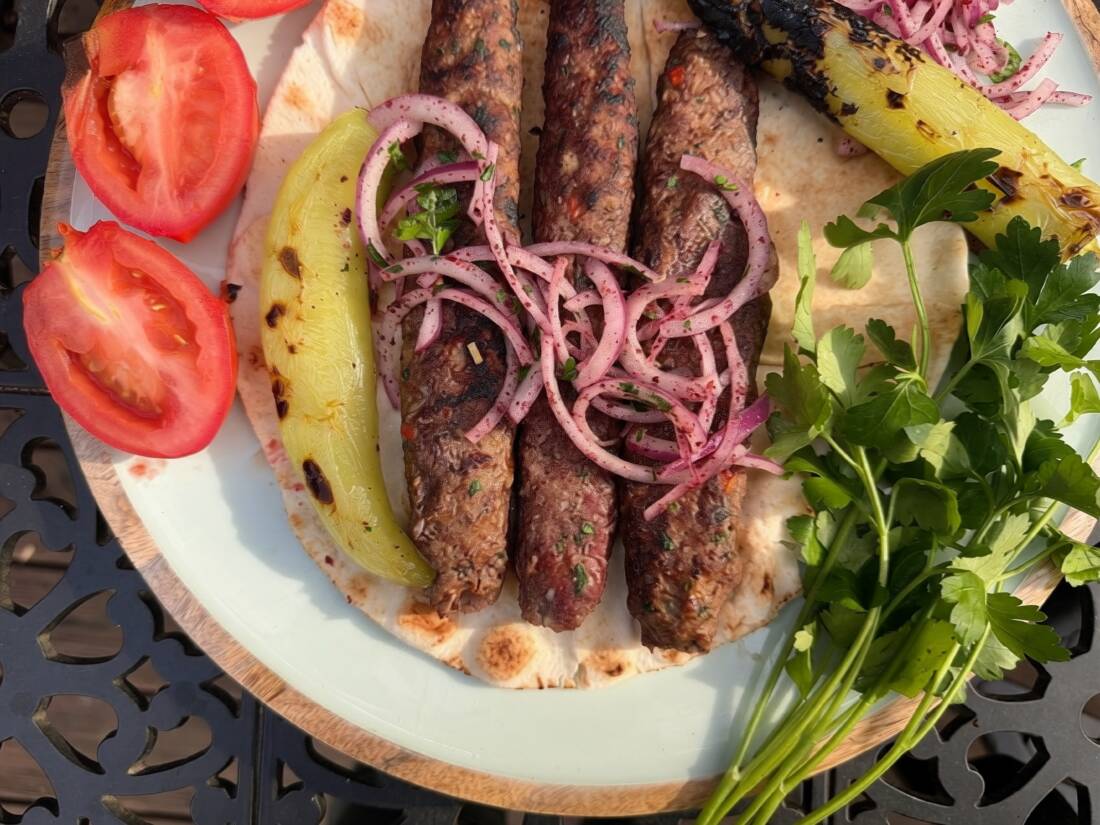
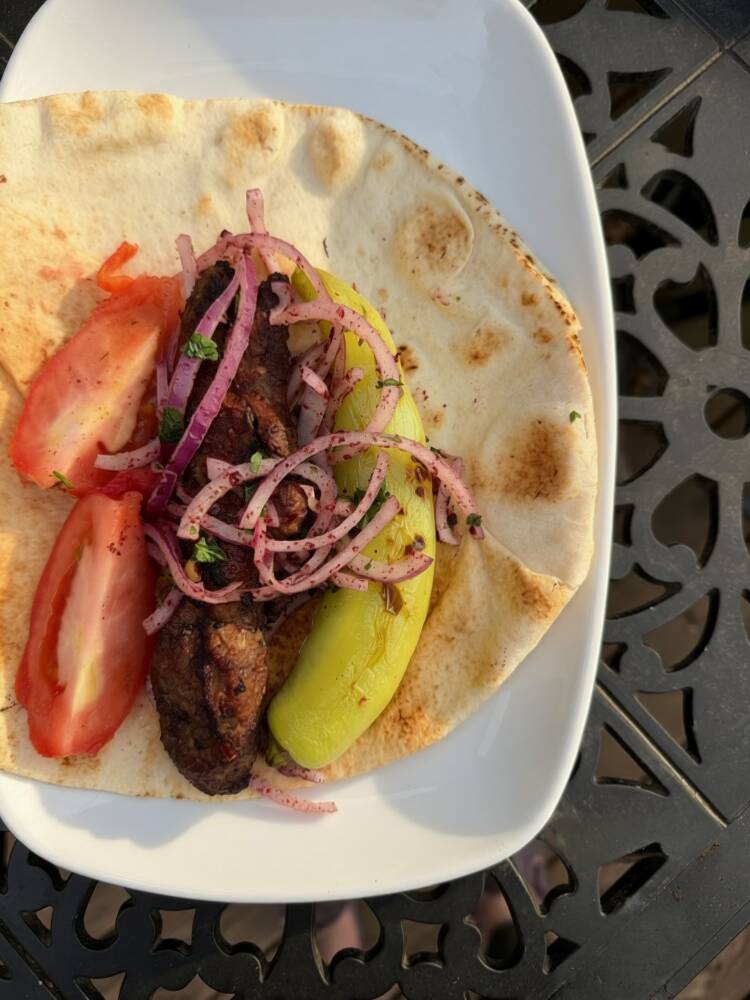
When it comes to food, Kadir keeps things pretty traditional, choosing dishes that remind him of home. No pork, and not a lot of variety outside of what he grew up with—but what he does eat is deeply rooted, intentional, and full of flavor. He gravitates toward Middle Eastern and Kurdish dishes, the kind that are built from scratch, passed down, and made with time. There’s a newer Mediterranean spot in Nashville, he mentioned THOLOS, and he told me something that really stuck with me. He ordered kebabs there, and it tasted exactly like the ones from his hometown. That kind of moment? You can’t fake that. He’s tried kebabs all over Nashville, but that one stood out. And specifically, it was Adana Kebab—smoky, spiced, and done right.
Beyond that, one of his favorite dishes is Kurdish mombar—a delicious treat you usually don’t see in restaurants because it takes quite a bit of time to prepare. It’s made with sheep casing stuffed with rice, mutton, black pepper, and cinnamon, then fried to perfection. This dish is deeply traditional and feels very personal—more like something you’d find made at home rather than on a menu. He mentioned that his mom makes it incredibly well. He also shared his love for Kurdish soups—rich, comforting, and often packed with grains, nuts, or dumplings. But what really caught his attention? Breakfast.
For Kadir, breakfast is everything. If you know anything about a traditional Turkish or Kurdish breakfast, you know—it’s not just a meal, it’s a full spread. Cheese, olives, fresh bread, cucumbers, tomatoes, endless tea. He told me about a specific cheese from his hometown—near the border of Iran—called Van herbed cheese, made from milk infused with wild mountain herbs. It’s something you can’t replicate, mass-produce, or find in a grocery store. That kind of food doesn’t exist in processed form—it lives in place and in tradition. And that’s how he eats. Whole foods. No shortcuts. Nothing overly processed. Just clean, simple, traditional meals.
He’s not big on sweets—but tea? That’s a different story. Ten cups a day, minimum. Tea, sunflower seeds, a movie playing, and his cat, Mia—a fluffy little Scottish Fold he proudly introduced during our interview. That whole scene felt like its own ritual.
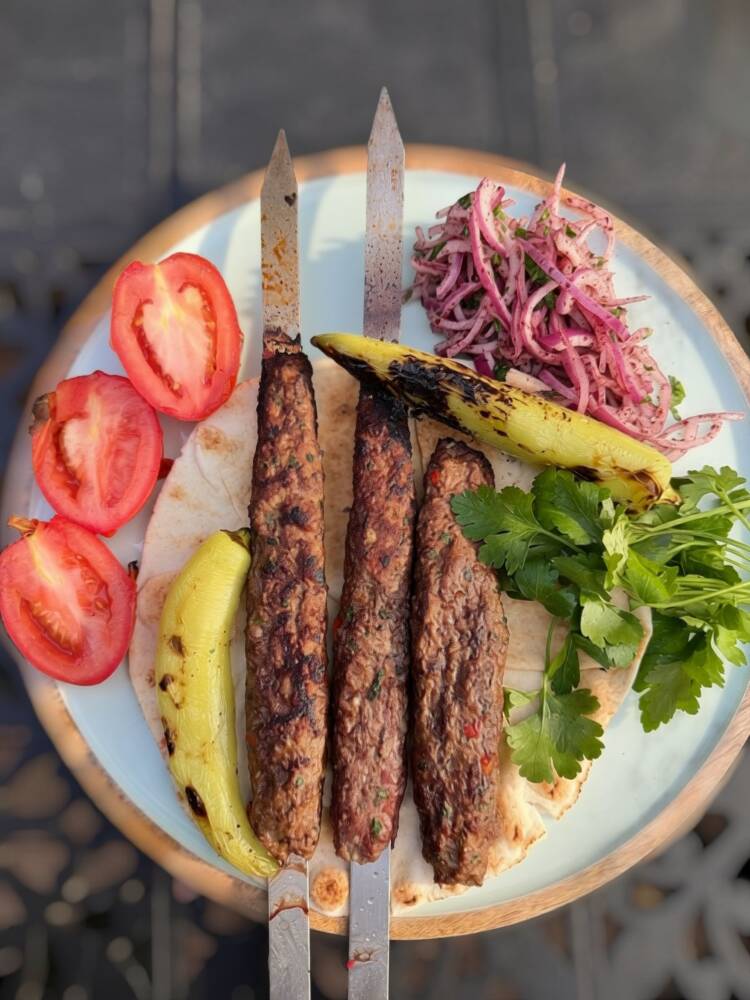
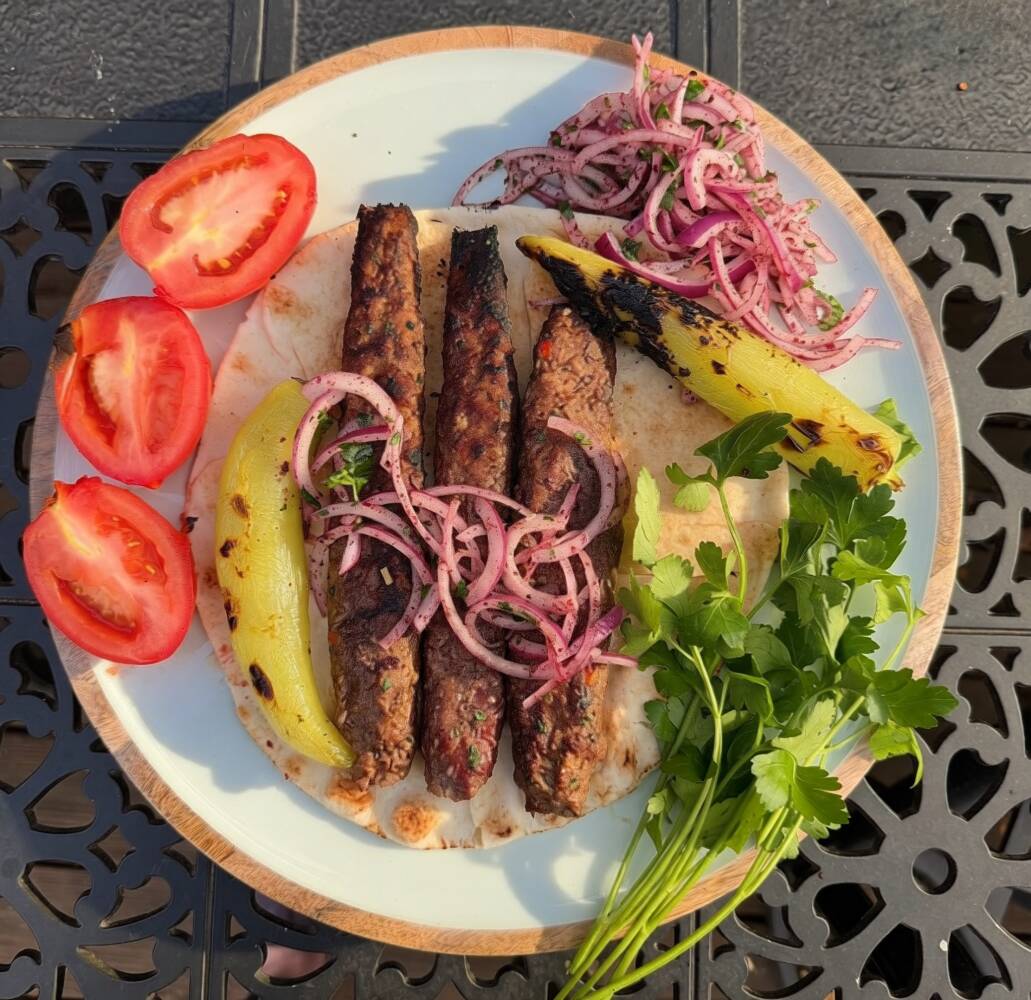
Hearing all of that genuinely touched me, making this next part feel even more personal. Because of this dish, I knew exactly where to go next. Naturally, I had to create an Adana Kebab—something bold, fiery, and crafted entirely by feel, just like how VaVeYLa came to life. I didn’t take this lightly. I headed straight to my roots—learning from my mom, who’s Persian, and my dad, who’s Kurdish. Yes, this one really hit close to home. There’s a special technique involved—the shaping, the perfect balance of spices, and how the meat needs to hold onto the skewer—it’s not something you just improvise. I even stopped by Al Madina International Market to pick up everything I needed—fresh herbs, freshly baked bread, peppers, tomatoes, and sumac—all those little details that make it special. And after a few tries, I finally found my rhythm.
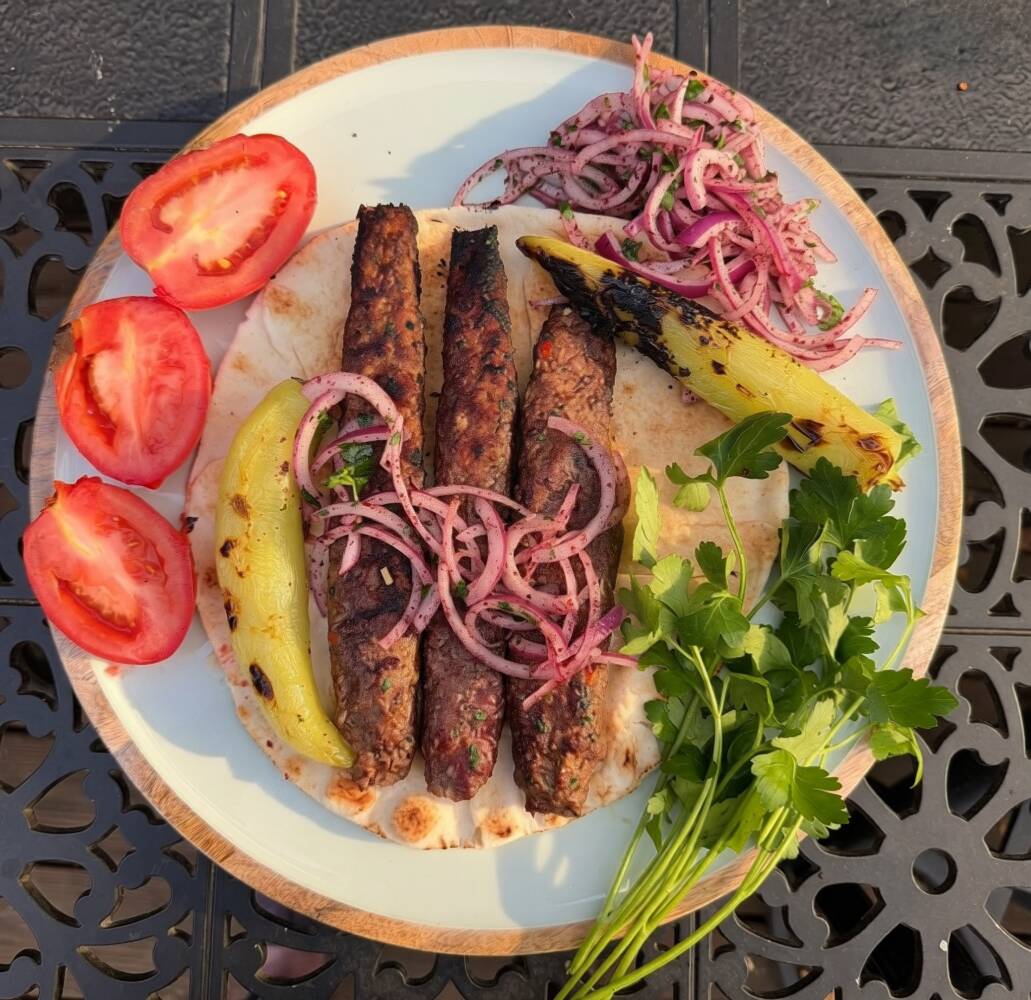
I served it up with fresh bread and all the sides, beautifully layered just as it should be. My dad, my husband, and my son—who are all pretty much kebab critics in their own right—gave it their ultimate approval. It’s safe to say, it really hit the spot! This dish is one of those wonderful recipes meant to be shared, built on tradition, guided by instinct, and best enjoyed around a table with loved ones. For me, it was a perfect tribute to VaVeYLa. Check out the recipe below!
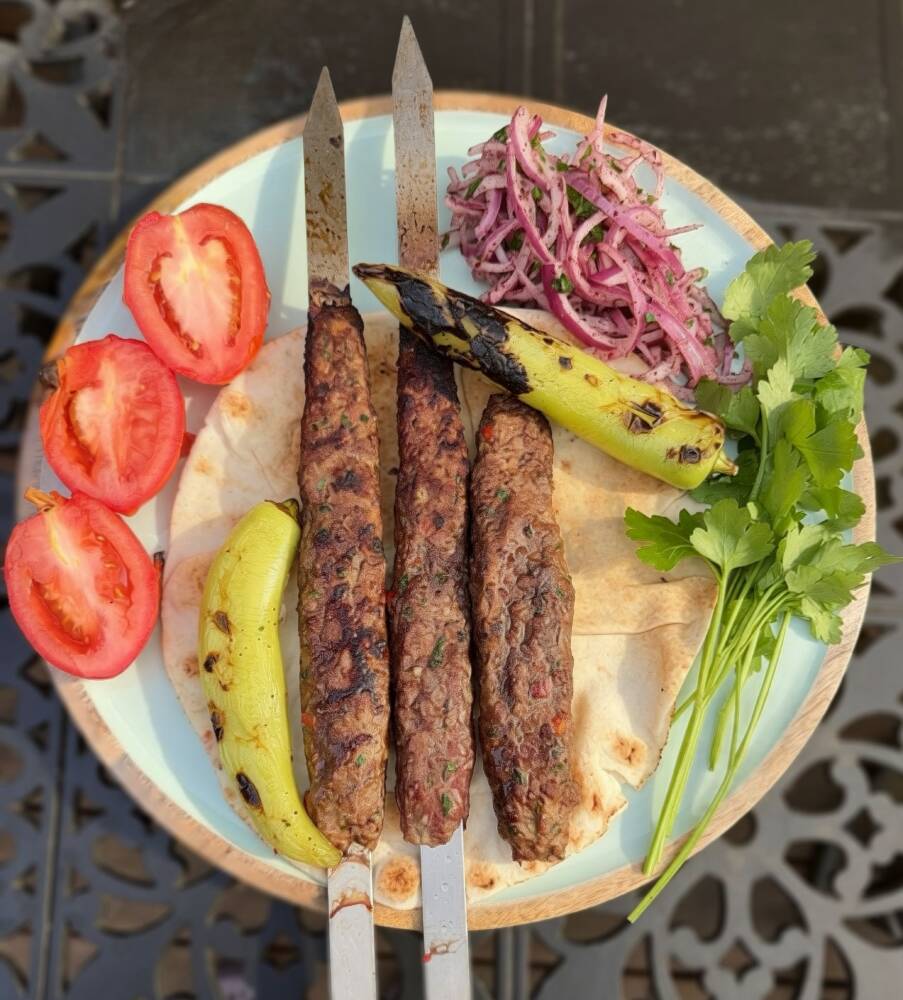
Adana Kebab (Fire-Grilled)
Serves:4| Prep Time: 25 minutes |Cook Time: 10–12 minutes
Ingredients for the Kebab:
- 2 lbs ground lamb
- 1 small red bell pepper, very finely minced
- 1 small onion, very finely minced (squeezed dry)
- 3 cloves garlic, minced
- 1 ½ teaspoon sea salt
- 1 teaspoon ground black pepper
- 1 ½ teaspoon paprika
- 1 teaspoon Aleppo pepper (or red pepper flakes)
- ½ teaspoon cumin
- ½ teaspoon cinnamon
- 2 tablespoons chopped fresh parsley
Optional Ingredients for the Serving:
- Lavash or pita bread
- Grilled tomatoes
- Grilled peppers
- Sumac onions (thinli sliced red onion, extra virgin, olive oil, sumac, parsley, lemon, and sea salt)
- Fresh herbs (parsley, mint)
- Yogurt or garlic sauce
Directions:
- In a large bowl, combine the lamb, minced pepper, onion, garlic, spices, and parsley.
- Wearing latex gloves, mix the meat with your hands for 5 minutes until it becomes sticky and cohesive.
- Use wide, flat metal skewers if you have them (traditional Adana style). Take a handful of meat, press and spread it along the skewer, then flatten it slightly. You can also create light ridges with your fingers on the meat if you prefer. The meat should feel secure on the skewer and not slide so it can be placed on the grill without falling off.
- Preheat the grill to medium-high heat. Grill the skewers for 4–5 minutes per side, turning each skewer carefully to cook all sides. Cook until nicely charred on the outside and juicy on the inside.
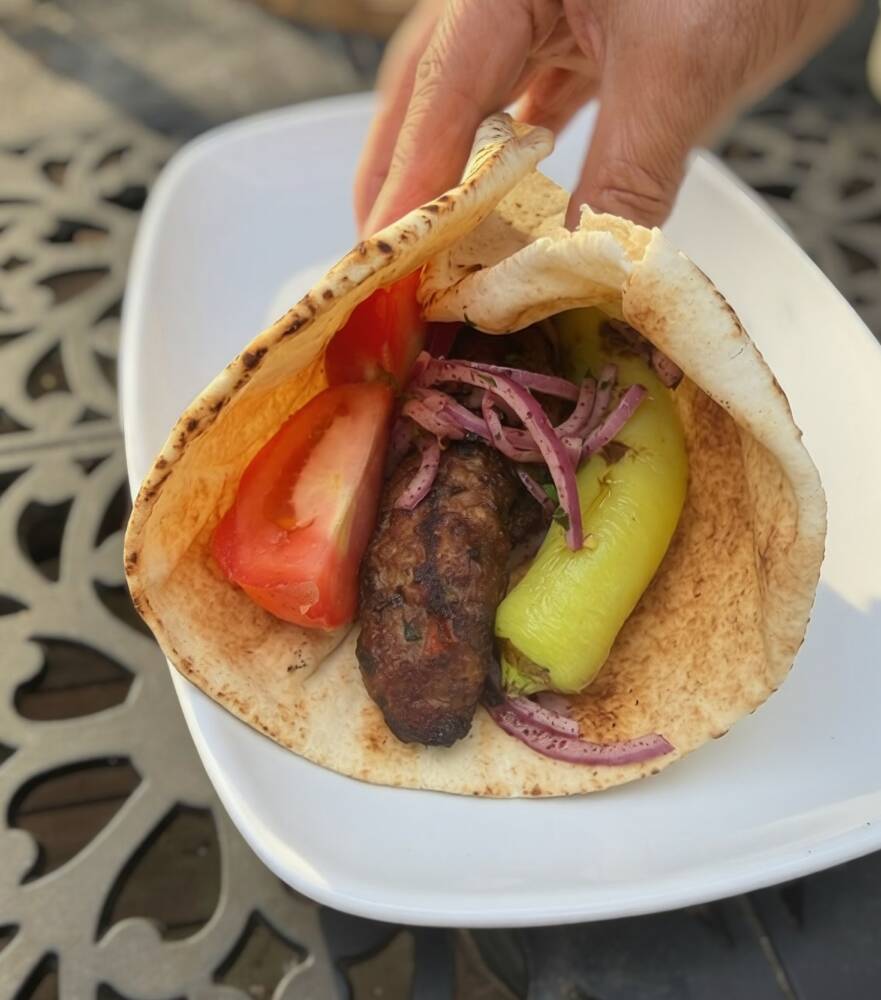
- Let the kebabs rest for a couple of minutes. Slide the kebabs off the skewers onto warm lavash or pita. Add grilled tomatoes and peppers, sumac onions, and fresh herbs. Enjoy!