

I first came across Afta Hill on Instagram through his video “LA BOOBOO”. What immediately caught my attention was how effortlessly he blended singing, rapping, and Farsi vocals — it felt lively, innovative, and deeply connected to his identity. And then there was his humor: the oversized “LA BOOBOO” around his neck had me laughing. That mix of artistry and playfulness made it obvious I needed to connect with him and learn more about his story. When I first reached out to Toronto-based artist Afta Hill, I knew this feature would be special. It offered not only a chance to explore his music and background but also the perfect reason to reconnect with my Persian roots through a seasonal recipe: a warm, nutrient-rich bowl of Ash Reshteh, just in time for fall. Check out the recipe below!
Afta’s journey started at just twelve years old, when he began experimenting with beats on his brother’s laptop. Growing up surrounded by rap, he wanted to rhyme but didn’t know where to start—so he built his foundation himself. He made beats, rapped over them with friends, and kept creating until he gained recognition at eighteen. What began with production quickly expanded into rapping and eventually singing. Today, he’s a true triple threat—singer, rapper, and producer—crafting a sound that reflects his influences and his identity. His voice carries echoes of Michael Jackson, who fascinated him as a child, while his love for hip-hop was shaped by artists like Eminem, Ice Cube, Lil Wayne, and Kanye West. The duality of producing and rapping drew him to Kanye in particular, while Childish Gambino’s early mixtapes and Kid Cudi’s melodic approach opened new doors in his artistry. Later, Toronto’s own The Weeknd made a big impact, blending angelic vocals with darker themes in a way that was both strange and captivating for the time. It was a sound that Afta could immediately connect with as an Iranian-Canadian navigating identity and expression.
His newest chapter comes in collaboration with fellow Iranian-Canadian artist Shalco. Together, they’re creating music under the name SANDBOYS, and their debut single “Park” offers a glimpse into something truly unique. Their single “Park” reimagines the sounds of mehmooni—the Persian house parties of their youth—where the music was often cheesy by design but unforgettable. With “Park,” they’ve transformed that nostalgia into something both current and cool, a track that feels like stepping into your parents’ party while still appealing to the next generation. Their mission goes beyond Persian audiences alone; they want to bring these sounds to English-speaking spaces in a way that hasn’t been done before. The timing was uncanny—just as they were shaping SANDBOYS, Ed Sheeran dropped “Azizam,” a Persian-inspired track. For Afta, it was a reminder of how rare and necessary this work is. While Sheeran worked with Persian collaborators, SANDBOYS’ approach comes with lived authenticity. It’s their culture, their voices, and their lived experience driving the music—and that credibility matters. That authenticity is clear in their recent single “Man of the Match.” The track is all energy—party vibes from the first beat, motivational lyrics that declare resilience: “We’ve been down. We got up. Even when ain’t nobody showed up. Been through hell, heaven and back. Real ones stayed, now the stadium’s packed.” It’s hype, it’s inspirational, and it’s the perfect anthem for shaking off struggle and claiming triumph.
At the core of Afta’s work is a philosophy: joy is radical. In a world filled with oppression and struggle, expressing joy—especially as someone from a marginalized community—is not ignorance; it’s resistance. It’s rebellion in its most beautiful form. That blend of defiance and happiness runs through his music. Looking ahead, Afta Hill aims for big, meaningful projects—whether that’s an album, a film, or another passion project that expands his artistry. At the same time, he’s deeply committed to collaboration. Beyond his own music, he thrives on producing and helping others realize their visions, demonstrating his skills as a rapper, singer, and producer. He’s also dedicated to finding balance—getting away from the internet’s noise to create sincerely while still connecting with people through his music.
“MAN OF THE MATCH” is just the beginning of what’s to come, and it’s already a perfect addition to any playlist. Whether you’re getting ready for a night out, chasing a goal, or just needing a boost of energy, this track delivers. Be sure to check out Afta Hill and SANDBOYS on all streaming platforms—their sound is a vibe you don’t want to miss. If you’re in the Montreal area on October 4th, check out the link below to grab your tickets for the live “Home and Away” show featuring SANDBOYS!
AFTA HILL Linktree

When it comes to food, Afta Hill has some strong opinions about tomatoes. Specifically, raw ones. He can handle them cooked down into sauces, soups, or stews, but raw tomatoes? Absolutely not. As he put it, “the water inside the tomato tastes like it’s mad at you.” I had to laugh, because he’s actually the third artist I’ve interviewed who swears off raw tomatoes. For Afta, refreshing vegetables like cucumbers—with their crunch and clean flavor—are far more acceptable.
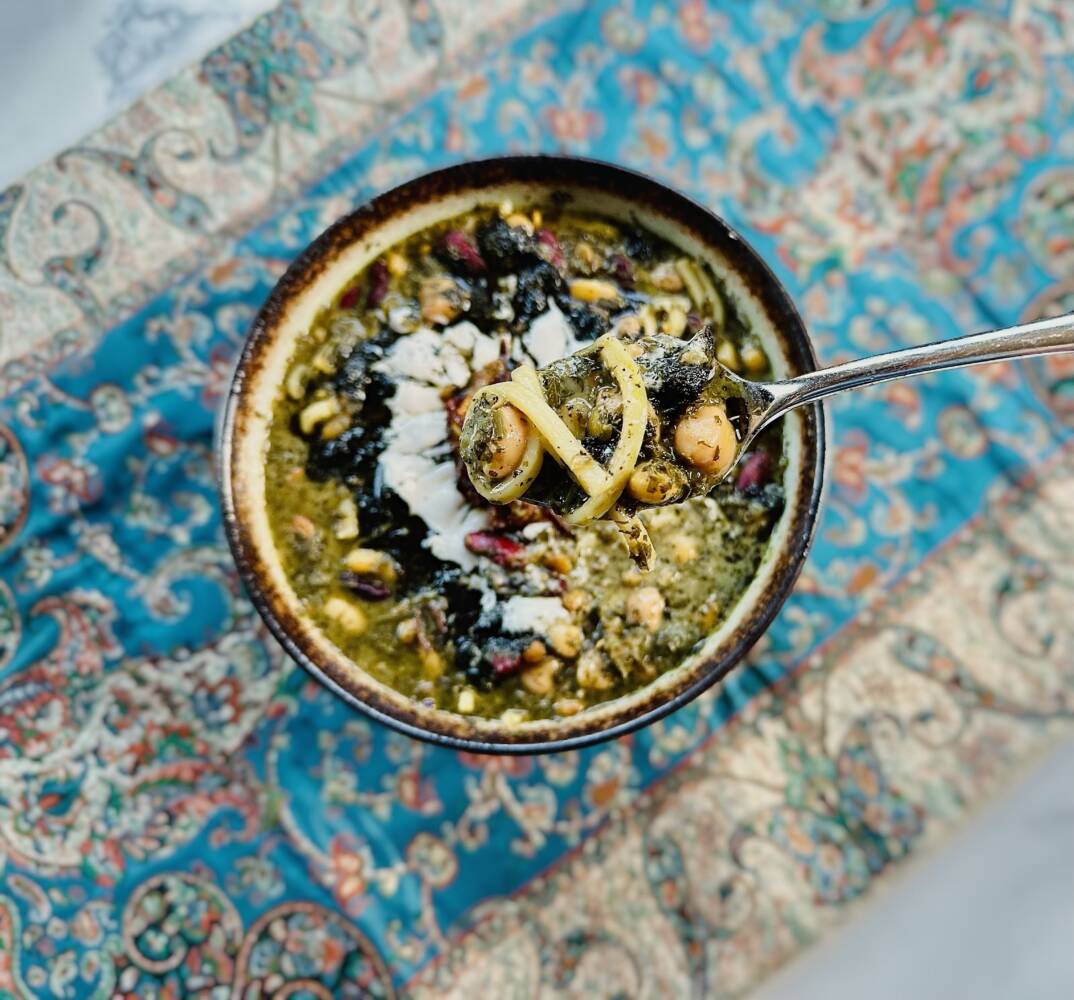
When it comes to nostalgia, though, his favorites come straight from home. His mother is an exceptional cook, and Iranian dishes are at the heart of his most cherished food memories. At the top of that list is Ash Reshteh. One of Afta’s clearest memories is traveling to Iran for Nowruz at age fourteen. In the mountains, surrounded by snow, he and his family ate bowls of Ash Reshteh from street vendors. The hearty, herb-packed soup was warm, filling, and unforgettable—a core memory he still treasures today. Another dish close to his heart is Tahchin, the golden, layered Persian rice dish often baked with saffron and chicken. It’s tied to his father, who passed away in 2022, and every time Afta eats it, he’s reminded of those shared moments together. For him, Tahchin is more than food—it’s memory, connection, and love in edible form.
Day to day, Afta loves cooking at home. Fried rice is one of his go-tos, always made with Basmati rice (the only rice any Iranian uses). He takes the time to marinate chicken, chop vegetables, and cook it properly—using rice that’s a day or two old for the best flavor and texture. He also makes quick stovetop kebabs by mixing seasoned ground beef with minced onions and sumac, frying them off in a pan with a bit of oil, and finishing with tomato paste, saffron, and water for a simple, flavorful dish. Another favorite? Tacos from scratch. He loves blending spices into a base for chicken or beef, frying the shells, and treating himself to the occasional indulgence.
Living in Toronto, he also has the luxury of great pre-made Persian food when he doesn’t feel like cooking. But overall, he leans savory. For snacks, he reaches for vegetables, such as celery and carrots, or kettle-cooked chips and jalapeño chips. One tradition he especially loves is the Persian pairing of chips and yogurt—especially with shallots mixed in, which transforms it into a flavorful dip. While he doesn’t have much of a sweet tooth, if dessert’s on the table, he’ll go for blondies with chocolate chips or an intricate cookie.
For this feature, though, I knew the recipe had to be Ash Reshteh. It’s a dish full of meaning for Afta—rooted in family, memory, and culture—and it also happens to be the perfect fall recipe. Packed with beans, herbs, noodles, sautéed onions, and topped with a swirl of mint oil and kashk (fermented whey), it’s savory, nourishing, and comforting. Ash Reshteh is not only delicious, it’s nutrient-dense and easy to meal prep for the week ahead. It’s the perfect pairing for Afta Hill’s music: layered, soulful, and rooted in tradition, yet made to be shared. Check out the recipe below, and let a bowl of Ash Reshteh soundtrack your fall with warmth and radical joy.
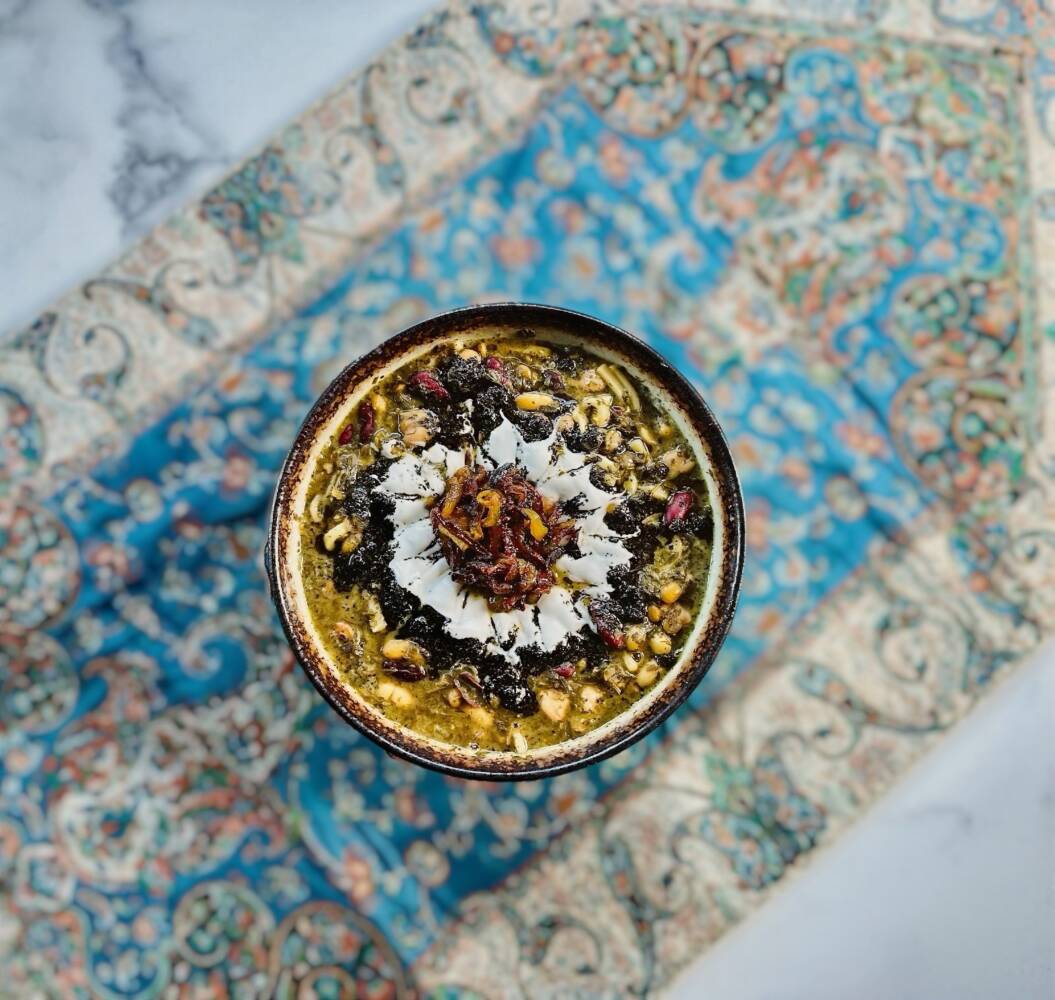
Ash Reshteh (Persian Noodle Soup)
Ingredients
- 1/2 cup chickpeas (soaked overnight)
- 1/2 cup navy beans (soaked overnight)
- 1/2 cup kidney beans (soaked overnight)
- 1/2 cup green lentils (soaked for two hours before cooking)
- 1 large onion, diced
- 4 garlic cloves, crushed
- 2 teaspoons tumeric, divided
- sea salt and freshly ground black pepper to taste
- 10 tablespoons of extra virgin olive oil, divided
- 2 cups parsley
- 2 cups cilantro
- 2 cups spinach
- 1/4 cup fresh mint
- ½ lb reshteh noodles
- 10 cups of water or vegetable broth
- 1 onion, thinly sliced for topping
- ½ cup kashk (fermented whey or yogurt if you prefer a substitute)
- 2 tablespoons dried mint
Directions
- Drain soaked chickpeas, navy beans, and kidney beans.
- In a pan, fry one chopped onion in four tablespoons oil until golden. Add garlic, 1/2 teaspoon turmeric, salt, and pepper to taste.
- In a large pot, bring 6 cups of water and beans to a boil. Add the onion mixture to the large pot of beans. Cover the beans and reduce the heat to a simmer over low heat for 1 hour until tender.
- Add the lentils and fresh herbs with four more cups of water. Cook for an additional 30 minutes.
- Break reshteh noodles in half and add to the pot. Stir well to prevent clumping. Cook the noodles for 30 minutes.
- Add salt to taste. The texture should be thick but not dry. Add broth or water if the soup is too dense.
- Caramelize sliced onion with 1/2 teaspoon of turmeric and two tablespoons of olive oil.
- Briefly fry the dried mint in four tablespoons of olive oil, being careful not to burn it. Serve it immediately with soup.
- Ladle the ash reshteh, garnish it as desired with kashk, mint oil, and caramelized onions. Serve and enjoy!






Perfect article❤️ And shout out to afta for his amazing songs🔥
Perfect article 😋And shout out to sandboys for their amazing songs❤️❤️🔥
Thank you! So glad you liked it! 🙂